
Vacancy Loss Coverage Bellevue: Safeguard Rental Income When Units Sit Vacant
Rental properties in Bellevue can sit empty for weeks or months, draining your income while expenses keep piling up. Vacancy loss coverage Bellevue protects landlords from this financial hit by covering lost rent during unoccupied periods.
At First Rate Insurance Plus, Inc., we’ve seen how quickly vacancies can derail a landlord’s cash flow. The right coverage makes the difference between weathering a vacancy and facing serious financial strain.
What Vacancy Loss Coverage Actually Covers
How the Coverage Works
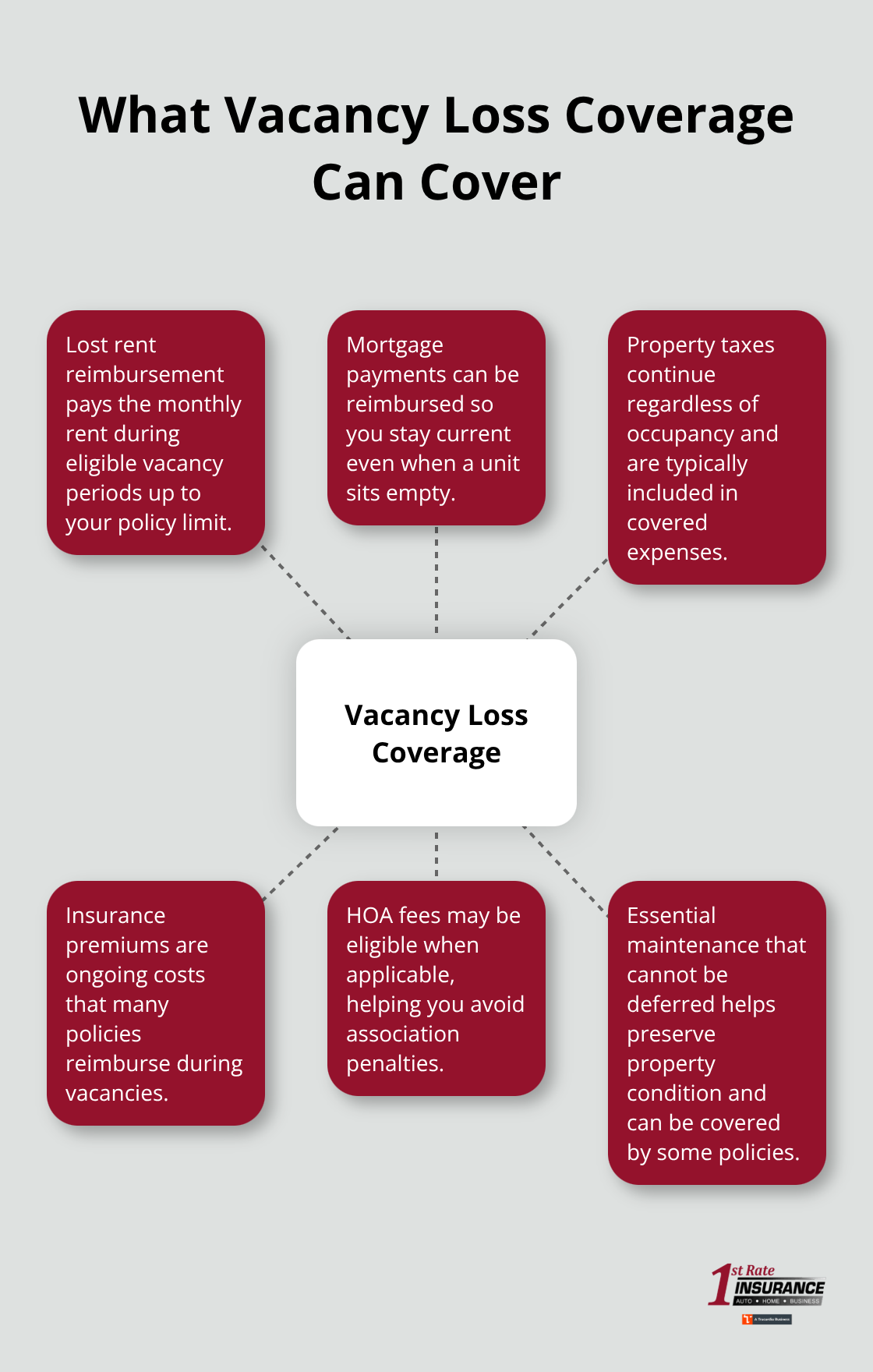
Vacancy loss coverage reimburses you for lost rental income when a unit sits empty between tenants. If your lease ends and the unit remains unrented for 30 days, the policy pays you the monthly rent amount up to your coverage limit. The coverage typically activates after a waiting period-often 14 to 30 days-which means you absorb the first two weeks of lost income yourself. Beyond lost rent, many policies also cover property expenses that don’t stop when tenants leave: mortgage payments, property taxes, insurance premiums, and maintenance costs. This dual protection prevents vacancies from creating cash flow crises that force landlords to tap savings or skip critical repairs.
What Triggers Coverage in Bellevue
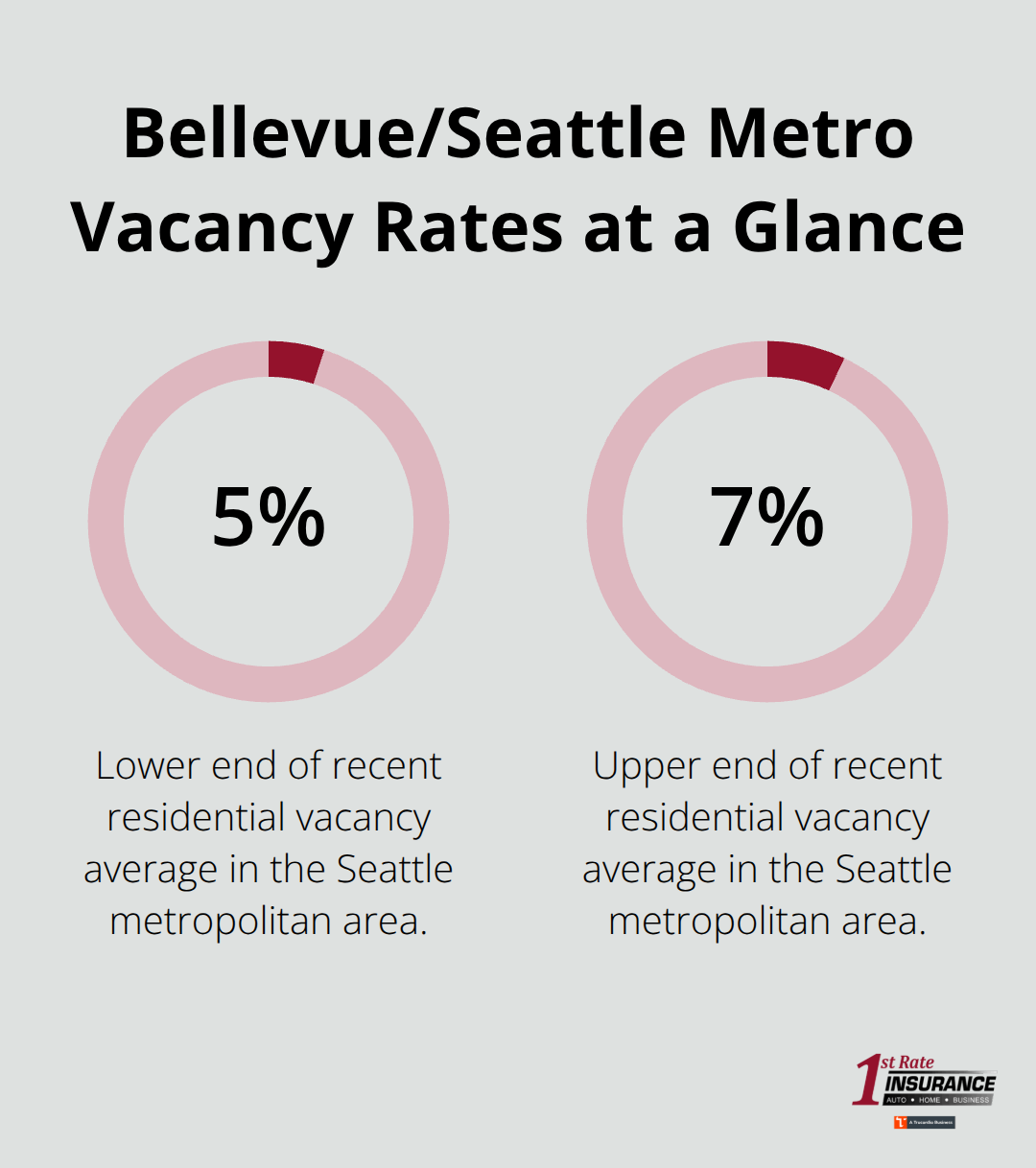
Bellevue landlords face specific vacancy pressures that make this coverage valuable. The Washington Apartment Association reports that residential vacancies in the Seattle metropolitan area averaged around 5 to 7 percent in recent years, meaning a typical 10-unit building expects at least one unit empty at any given time. Seasonal factors matter too-summer tends to see faster turnover as families relocate, while winter vacancies can linger for months. Unexpected vacancies strike when tenants break leases early, which happens more frequently during economic downturns or when job markets shift.
When Coverage Applies and When It Doesn’t
Property damage, major repairs, or code violations can force you to keep units offline for weeks while contractors work. Evictions, though uncommon in stable rental markets, create extended gaps and legal costs that drain reserves quickly. The coverage applies during normal turnover periods when you actively market the unit, not during intentional closures or extended renovations. Many policies may incorporate stricter vacancy clauses, often limiting coverage protects you if the unit is vacant beyond 30 or 60 consecutive days.
The Real Cost of Unprotected Vacancies
Without vacancy loss coverage, a single three-month vacancy on a $2,000-per-month unit costs you $6,000 in lost income while your mortgage, property tax, and insurance bills continue unchanged. The financial math becomes brutal fast. Selecting the right policy limits and deductibles for your specific situation requires careful attention to your property’s characteristics and local market conditions.
How Vacancy Loss Coverage Protects Your Bottom Line
When a rental unit in Bellevue sits empty, your expenses don’t pause. Mortgage payments continue, property taxes arrive on schedule, and insurance premiums keep hitting your account. Vacancy loss coverage addresses this harsh reality by reimbursing you for the rent you would have collected while simultaneously covering the operating costs that persist regardless of occupancy. A landlord with a $2,500 monthly mortgage and $400 in property taxes faces $2,900 in non-negotiable monthly expenses during a vacancy. Without coverage, a two-month turnover costs $5,800 out of pocket before you see a single dollar from a new tenant. The coverage works backward from your actual expenses, not from theoretical numbers, which means you recover what you genuinely lose rather than settling for a fixed payment that may fall short.
Real Rent Recovery and What It Actually Means
The rent reimbursement component pays you the monthly rent amount for each day the unit remains vacant, typically up to your policy limit. If your policy covers $2,500 monthly rent and the unit sits empty for 45 days, you receive approximately $3,750 in lost rent compensation. One critical detail that landlords often overlook: the waiting period. Most policies include a 14 to 30-day waiting period before coverage kicks in, which means you absorb the first two weeks of vacancy yourself. This structure keeps premiums reasonable but requires you to maintain a cash reserve equal to at least one month of expenses. Bellevue landlords with tight cash flow often discover this waiting period creates real hardship, making the decision about deductible levels genuinely important rather than academic.
Covering the Expenses That Never Stop
Beyond lost rent, the policy covers mortgage payments, property taxes, insurance premiums, HOA fees (if applicable), and essential maintenance costs that cannot be deferred. During a three-month vacancy on a typical Bellevue rental, these expenses total $3,000 to $4,500 depending on the property. The coverage prevents you from choosing between paying your mortgage and maintaining the property, a choice no landlord should face. Some policies limit expense coverage to a percentage of your rent or cap it at a fixed amount, so comparing specific policy language matters more than comparing carrier names. A $2,000-monthly-rent property with $800 in monthly expenses needs a policy that covers both the full rent and the full expense amount, not a policy that covers rent but caps expense reimbursement at 50 percent of rent.
The Cash Flow Stability Factor
Unexpected vacancies force decisions that damage long-term property value. Landlords without coverage often defer maintenance, skip necessary repairs, or cut back on tenant screening to fill units faster. These shortcuts create worse problems down the road. Vacancy loss coverage removes the desperation from the equation, allowing you to take the full 30 to 45 days needed for proper tenant vetting, professional cleaning, and minor repairs. The financial cushion translates directly into better tenant selection and property condition, which reduces future vacancy risk and maintenance costs. This protection operates most effectively when you understand your property’s actual monthly expenses and set coverage limits accordingly, not when you guess at a number that sounds reasonable.
Finding the Right Coverage Limits for Your Situation
Your coverage limits should match your actual financial exposure, not an arbitrary figure. Calculate your total monthly expenses-mortgage, taxes, insurance, maintenance reserves-and add your target monthly rent. This sum represents the minimum coverage limit you need to weather a typical vacancy without financial strain. Properties in Bellevue with higher rents and substantial expenses require higher limits, while smaller rental units may function adequately with more modest coverage. The deductible you select directly affects your premium cost, so balancing affordability with adequate protection requires honest assessment of your cash reserves and risk tolerance. Comparing options from multiple carriers reveals significant differences in how they calculate coverage limits, define waiting periods, and handle expense reimbursement-differences that directly impact your protection when a vacancy actually occurs.
How to Get the Right Coverage in Bellevue
Start with a Local Agent Who Knows Your Market
Securing vacancy loss coverage requires more than calling the first agent who answers. You need an agent who understands Bellevue’s rental market specifically, not someone who treats all properties the same. Local agents know which carriers offer the most competitive rates for residential rentals in your zip code, how quickly underwriters approve claims in Washington, and which policy structures actually work for landlords managing multiple units. When you contact an agent, bring your property financials: mortgage amount, property tax bill, insurance premium, and current rental rate. This data lets the agent calculate your true monthly exposure and recommend coverage limits that actually protect you, not limits that sound good in theory.
Compare Multiple Carriers on Your Actual Situation
An agent working with multiple carriers can show you how different underwriters structure their waiting periods, expense coverage caps, and deductibles. One carrier might offer a 14-day waiting period with full expense reimbursement, while another requires 30 days but charges significantly less. These differences matter enormously when a vacancy occurs.
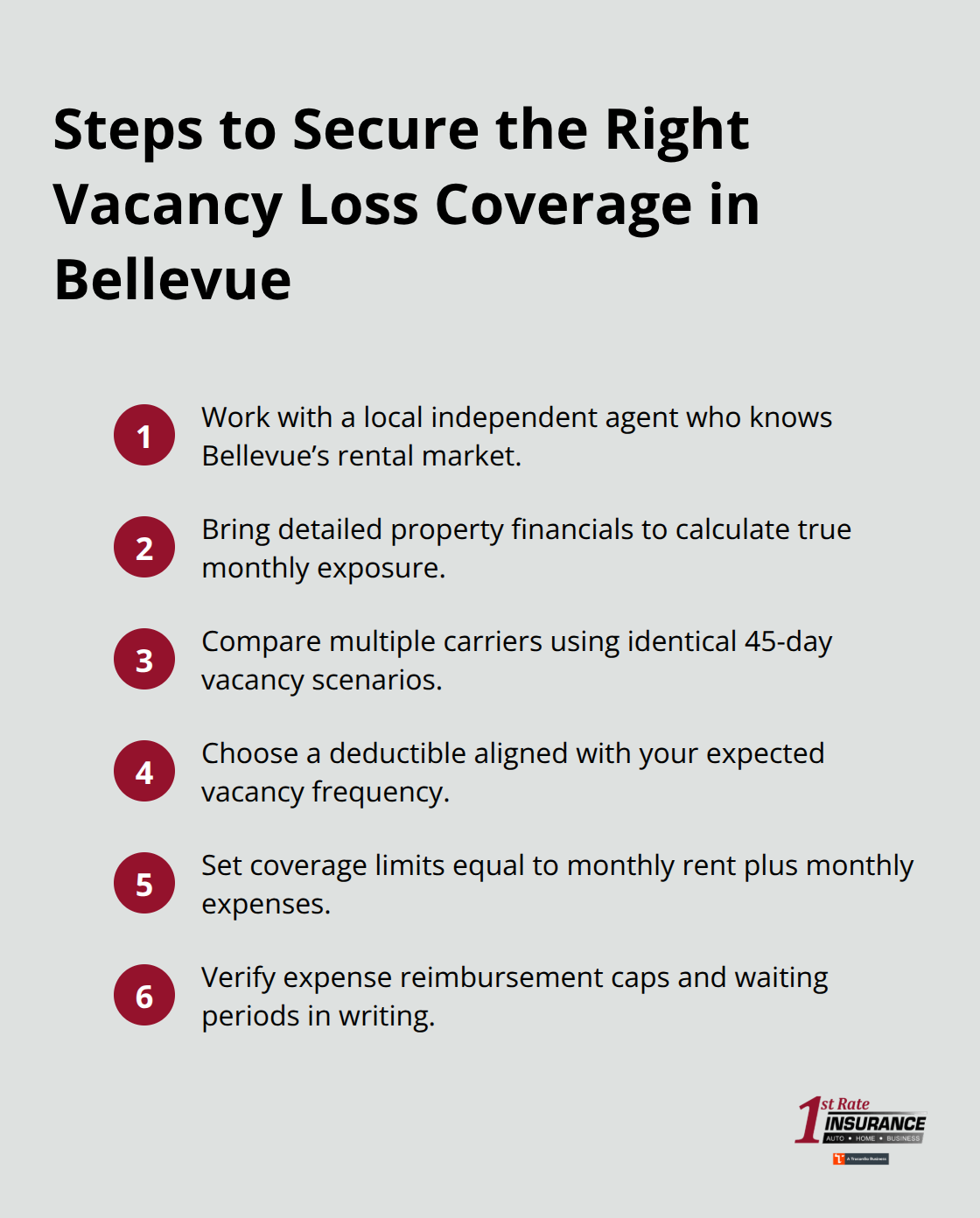
Request identical scenarios from three different companies: a 45-day vacancy on your specific property with your actual expenses. Their responses reveal how each carrier calculates benefits and which one actually covers your situation most completely. The carrier offering the lowest premium might impose expense caps that leave you short, while a slightly higher premium covers your full exposure. This comparison transforms an abstract decision into concrete numbers you can evaluate honestly.
Choose Your Deductible Based on Vacancy Frequency
Understanding your deductible choices separates smart landlords from those who overpay for protection they don’t need. A $500 deductible costs more in annual premiums than a $1,000 deductible, but the extra $500 per year only makes financial sense if you expect multiple vacancies within three years. Bellevue rental data shows average vacancy rates between 5 and 7 percent, meaning most landlords experience one significant vacancy every 18 to 24 months, not annually. If your property generates $2,500 monthly rent, a $1,000 deductible saves you approximately $200 to $300 yearly in premiums-money you should keep in reserve anyway for emergencies.
Set Coverage Limits That Match Your Actual Exposure
Your coverage limit should equal your monthly rent plus monthly expenses, and this calculation determines your actual protection level far more than your deductible choice. A property with $2,500 rent and $900 in expenses needs a $3,400 minimum limit; anything lower leaves you exposed during extended vacancies. Calculate your total monthly expenses-mortgage, taxes, insurance, maintenance reserves-and add your target monthly rent. This sum represents the minimum coverage limit you need to weather a typical vacancy without financial strain. Properties in Bellevue with higher rents and substantial expenses require higher limits, while smaller rental units may function adequately with more modest coverage.
Evaluate How Each Carrier Handles Expense Reimbursement
The way a carrier calculates expense coverage separates adequate protection from incomplete protection. Some policies limit expense coverage to a percentage of your rent or cap it at a fixed amount, so comparing specific policy language matters more than comparing carrier names. A $2,000-monthly-rent property with $800 in monthly expenses needs a policy that covers both the full rent and the full expense amount, not a policy that covers rent but caps expense reimbursement at 50 percent of rent. Request written quotes that specify exactly how each carrier would reimburse you during a 45-day vacancy on your property. The detailed comparison reveals which carrier actually protects your financial situation rather than which one sounds best in a sales pitch.
Final Thoughts
Vacancy loss coverage Bellevue protects your rental income when your property generates zero revenue but your expenses continue without pause. A single three-month vacancy on a $2,500-monthly unit costs $6,000 in lost rent while your mortgage, taxes, and insurance bills arrive unchanged. Coverage that reimburses both lost rent and ongoing expenses prevents vacancies from forcing you into desperate decisions that damage your property’s long-term value.
Bellevue’s rental market shows consistent vacancy rates between 5 and 7 percent, meaning most landlords experience significant turnover every 18 to 24 months. When that vacancy arrives, you’ll face it either with financial protection in place or without it. The difference between these two scenarios determines whether you maintain your property properly, screen tenants thoroughly, and preserve your investment’s condition.
Calculate your actual monthly exposure by adding your mortgage, property taxes, insurance premiums, and maintenance reserves to your target monthly rent-this number becomes your minimum coverage limit. Contact an agent who understands Bellevue’s specific rental market and can compare multiple carriers on your actual situation. Get quotes from First Rate Insurance Plus, Inc. to find vacancy loss coverage that fits your property’s specific needs and your budget.
Disclaimer: The information provided in this blog is for general informational purposes only and does not constitute legal, financial, or insurance advice. Coverage options, terms, and availability may vary. Please consult with a licensed professional for advice specific to your situation. Artificial intelligence may have been used to generate text and images in some blog articles.