

Landlord Liability Coverage Redmond: Shield Your Rental from Legal Risks
Owning rental property in Redmond comes with real financial exposure. A single accident on your premises can trigger lawsuits that drain your savings and threaten your investment.
Landlord liability coverage Redmond protects you from these risks. We at First Rate Insurance Plus, Inc. help property owners understand what coverage they need and how to get it right.
What Your Landlord Liability Coverage Actually Covers
Landlord liability coverage protects you against three specific financial threats that appear frequently in Redmond rental disputes.
Bodily Injury Claims on Your Property
Bodily injury claims arise when tenants or their guests suffer injuries on your property. A guest slips on an icy walkway in winter, a tenant’s child falls from a balcony, or someone gets injured due to a maintenance issue you missed-these situations trigger lawsuits that can cost tens of thousands of dollars. Washington courts premises liability damages awards typically settle between $25,000 and $500,000, depending on injury severity, medical costs, and available insurance. Your liability coverage pays medical expenses, lost wages, and pain-and-suffering damages up to your policy limit.
Property Damage Liability Protection
Property damage liability covers harm you cause to others’ belongings or structures. If your rental building damages a neighbor’s fence during construction, or if a plumbing leak ruins a tenant’s personal property, you must pay repair or replacement costs. This coverage protects your finances when accidents on your property affect neighboring properties or tenant possessions.
Legal Defense Costs That Add Up Fast
Legal defense costs get covered regardless of whether you win or lose a lawsuit. Attorney fees in Washington typically range from $150 to $300 per hour, and premises liability cases often require 50 to 100 billable hours before trial even begins. Your policy pays these defense expenses separately from your coverage limits, which means you don’t deplete your protection while fighting a claim.
Coverage Limits That Match Your Property Value
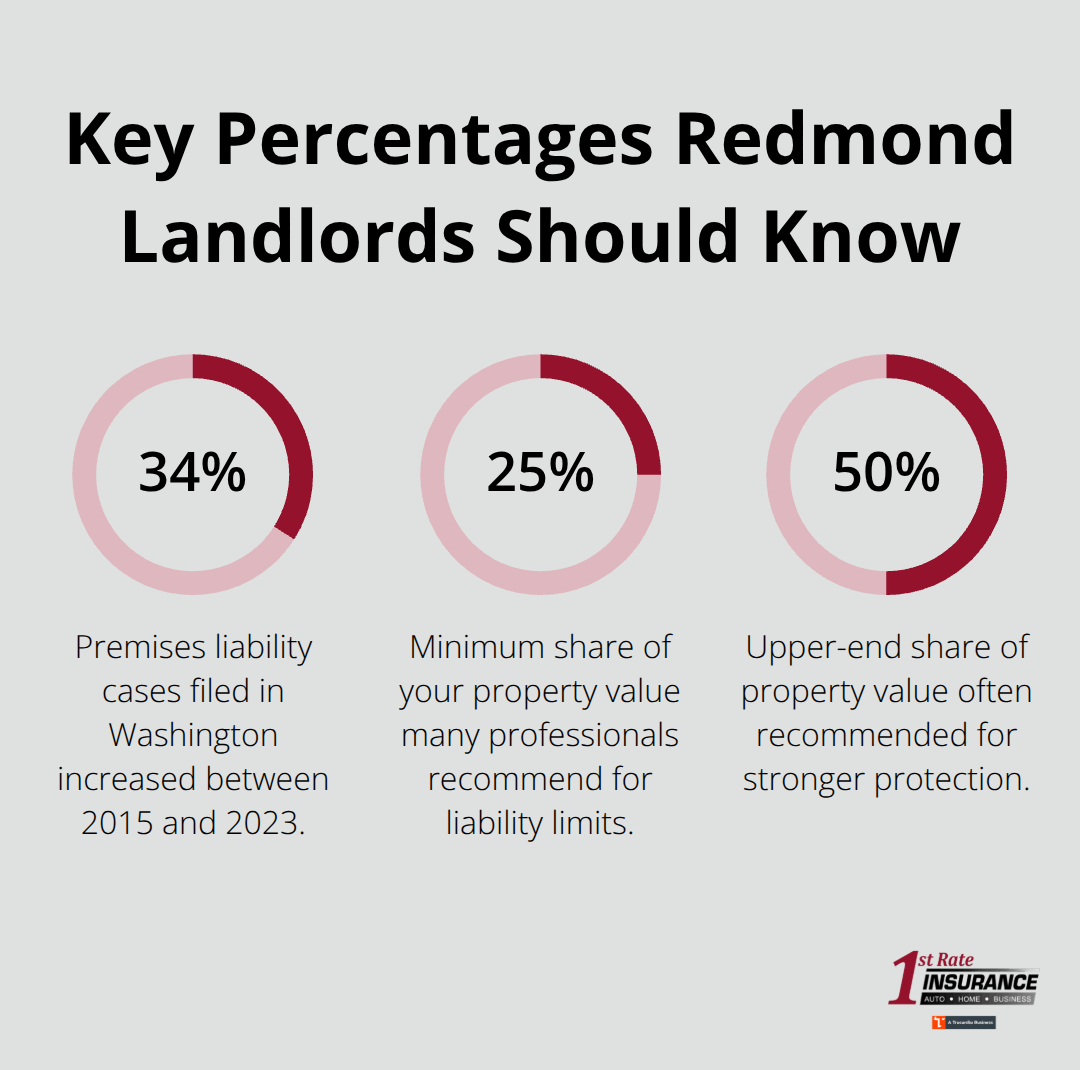
Redmond property owners often underestimate the coverage amounts they need. If your rental property is worth $400,000, carrying only $100,000 in liability coverage leaves you exposed to catastrophic personal liability. Washington state doesn’t cap damages in civil lawsuits, so a serious injury case can exceed $500,000 easily. Most insurance professionals recommend coverage limits equal to at least 25 to 50 percent of your property value. If your building generates $24,000 in annual rental income, try minimum coverage of $300,000 to $500,000. Some landlords add umbrella policies for additional protection-these typically cost $150 to $300 annually for $1 million in extra coverage and protect you when standard policies max out.
Finding the Right Coverage for Your Situation
The gap between what you think you’re protected for and what you actually need often determines whether a lawsuit bankrupts you or your insurance handles it. Your next step involves assessing your specific property type and tenant occupancy to determine which coverage limits truly fit your situation.
Why Washington Landlords Face Real Financial Exposure
Washington’s premises liability landscape has shifted dramatically over the past decade, and Redmond property owners who ignore this trend pay the price. King County court records show that premises liability cases filed increased 34 percent between 2015 and 2023, with settlements and judgments climbing even faster than case volume. This isn’t coincidence-medical costs in Washington have surged, and juries award damages more generously than they did fifteen years ago. A 2022 analysis by the American Association for Justice found that Washington ranked in the top ten states for median jury awards in personal injury cases, with premises liability claims averaging $187,000 when they reach trial.
Your liability coverage isn’t optional protection; it’s a financial firewall against the state’s aggressive litigation environment.
Medical Bills Push Damages Higher
Healthcare expenses in Washington exceed the national average significantly. A single emergency room visit for a serious fall or injury costs between $3,000 and $15,000 before imaging, specialist consultations, or follow-up treatment. Tenants or guests injured on your property pursue you for these costs plus pain and suffering, lost wages, and future medical care. Washington courts don’t cap non-economic damages, meaning juries can award unlimited amounts for pain and suffering when injury severity justifies it. A tenant who suffers a broken leg from a negligent maintenance issue might receive $50,000 in medical costs plus another $150,000 in pain and suffering damages-and your liability policy must cover both amounts up to your limit.
Legal Costs Drain Your Resources Before Trial
Defense attorney fees represent a hidden financial threat that many Redmond landlords underestimate. Washington premises liability attorneys charge $150 to $350 per hour depending on experience and location, with cases requiring 75 to 150 billable hours before trial begins. A modest injury claim that settles before trial costs $15,000 to $25,000 in legal defense alone. If the case proceeds to trial, total defense costs easily exceed $50,000 to $75,000. Your liability policy covers these expenses outside your coverage limit, which means you’re protected from depleting your injury settlement funds while your attorney defends you (without adequate coverage, you either pay attorneys out of pocket or represent yourself-both options carry serious financial and legal consequences).
Why Coverage Limits Matter More Than You Think
Redmond property owners often carry inadequate coverage limits that leave them exposed when serious injuries occur. If your rental property is worth $400,000, carrying only $100,000 in liability coverage leaves you vulnerable to catastrophic personal liability. Washington state doesn’t cap damages in civil lawsuits, so a serious injury case can exceed $500,000 easily. Most insurance professionals recommend coverage limits equal to at least 25 to 50 percent of your property value. If your building generates $24,000 in annual rental income, try minimum coverage of $300,000 to $500,000. Some landlords add umbrella policies for additional protection-these typically cost $150 to $300 annually for $1 million in extra coverage and protect you when standard policies max out.
Assessing Your Specific Property Risks
The gap between what you think you’re protected for and what you actually need often determines whether a lawsuit bankrupts you or your insurance handles it. Your next step involves evaluating your specific property type and tenant occupancy to determine which coverage limits truly fit your situation.
Matching Coverage Limits to Your Redmond Property
Calculate Your Coverage Needs Based on Rental Income
Your property type and rental income directly determine the coverage limits you actually need, and most Redmond landlords get this calculation wrong. A single-family home renting for $2,000 monthly carries different risk than a four-unit building generating $8,000 in monthly revenue, yet many owners apply the same coverage limits to both situations. Start by calculating your annual rental income and multiplying it by 10 to 12-this gives you a practical baseline for liability limits. If your property generates $30,000 annually, try $300,000 to $360,000 in coverage.
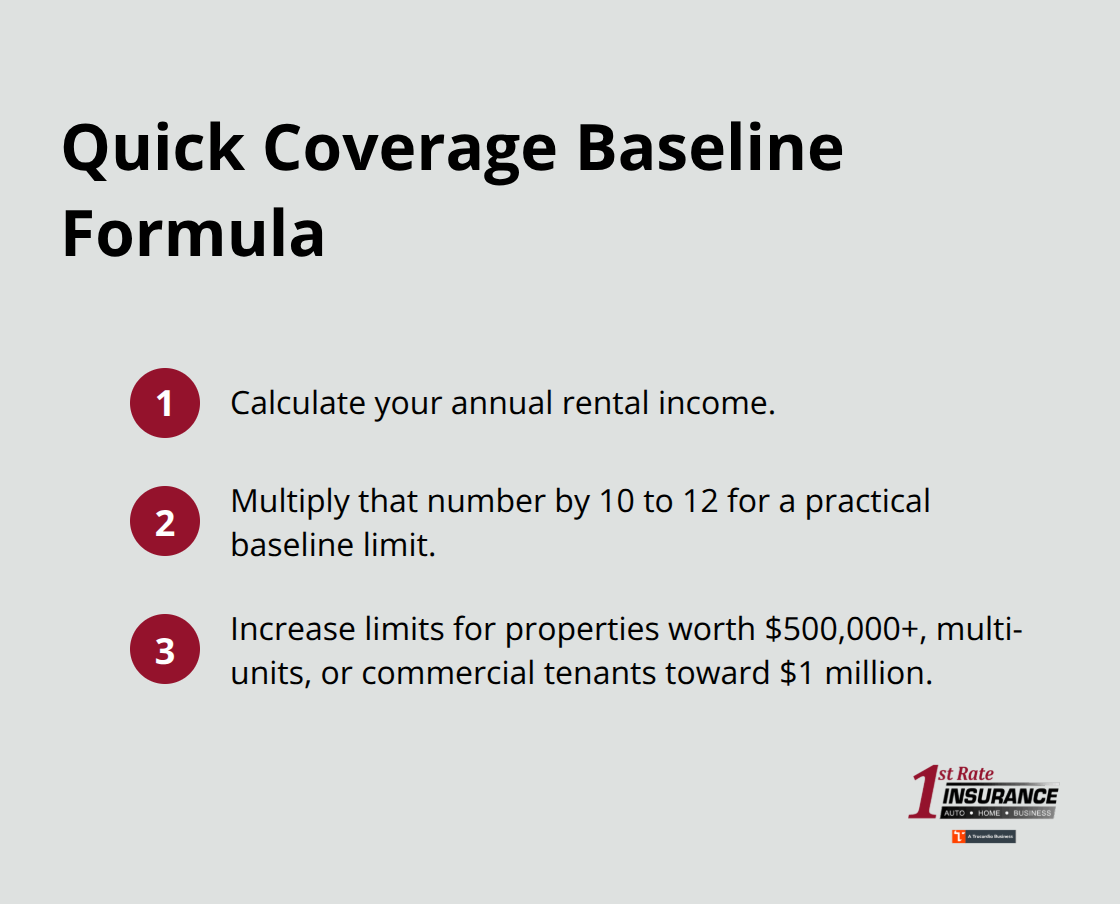
Properties worth $500,000 or more should carry minimum limits of $500,000, and Redmond owners with multiple units or commercial tenants should push toward $1 million.
Washington courts don’t cap damages, and medical costs here exceed the national average, so inadequate limits expose you to personal liability that can follow you for years through wage garnishment and asset seizure.
Match Coverage to Property Value and Risk Profile
Your property’s specific characteristics shape the coverage amount that protects you adequately. A newer single-family home with professional property management requires different limits than an older four-plex with high tenant turnover. Properties generating strong rental income can support higher coverage limits without straining cash flow. Older buildings with deferred maintenance issues warrant higher limits because accident risk increases when systems fail or structural problems exist.
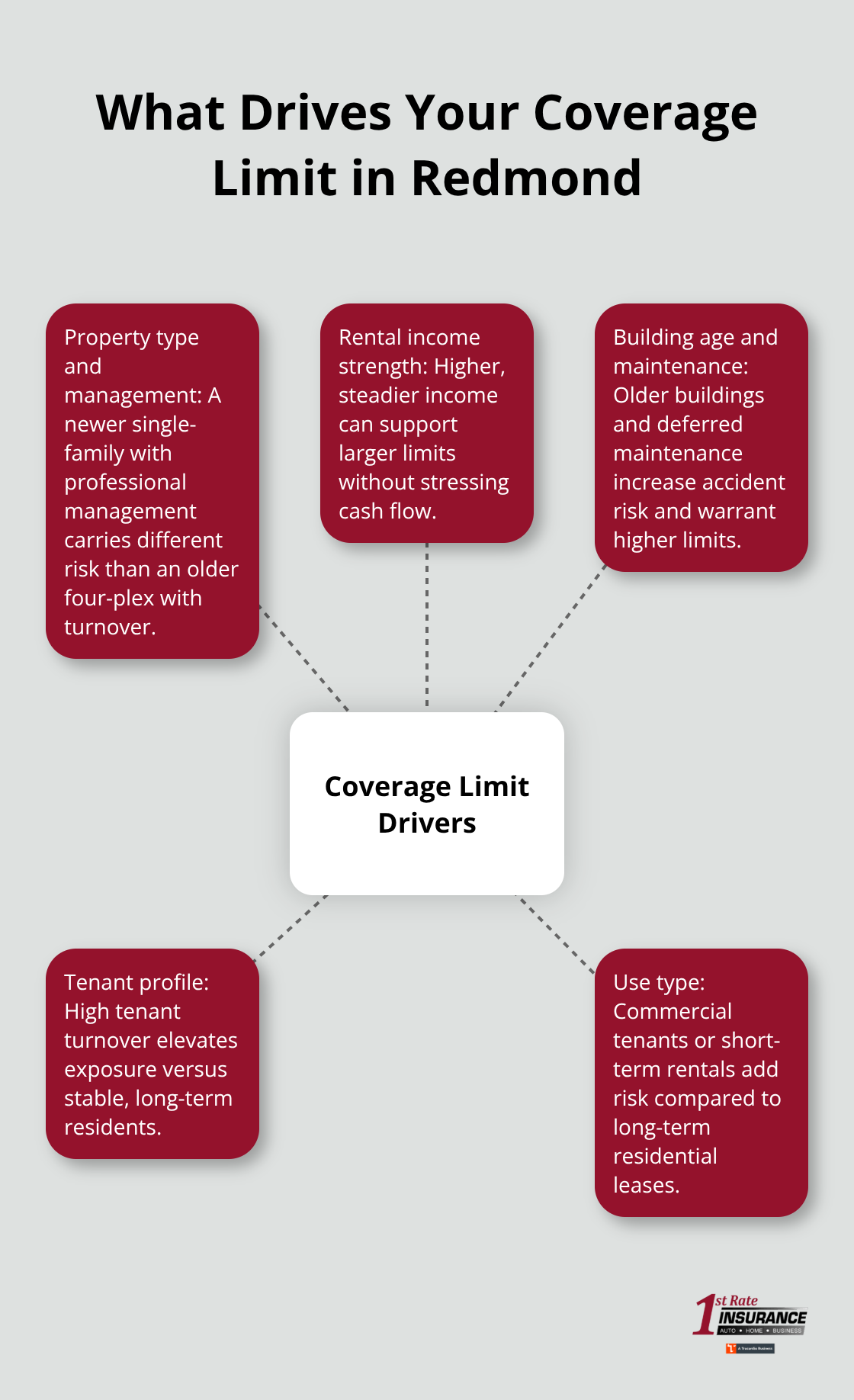
Commercial tenants or short-term rentals create additional exposure compared to long-term residential leases, so these properties need stronger protection.
Select Your Deductible Strategy Wisely
Your deductible choice directly impacts your monthly premium and your out-of-pocket costs when claims happen. Most Redmond landlords choose $1,000 or $2,500 deductibles because they keep premiums lower, but this decision creates a false economy. A $1,000 deductible might save you $200 annually compared to a $5,000 deductible, yet when a serious injury claim arrives, you’ll pay that $1,000 out of pocket before coverage kicks in-money you won’t recover. Properties with strong tenant screening, regular maintenance records, and professional property management can justify higher deductibles and lower premiums. Properties with high tenant turnover, older buildings, or maintenance gaps should carry lower deductibles to minimize out-of-pocket exposure when preventable accidents occur.
Review Your Coverage Annually
Your risk profile shifts with property conditions and occupancy patterns, so your deductible strategy needs regular review. After tenant changes, property renovations, or maintenance work, reassess whether your current deductible still fits your situation. A property that transitions from high turnover to stable, long-term tenants might support a higher deductible. Conversely, a building that develops maintenance issues or experiences increased vacancy rates should move toward lower deductibles. Licensed agents can help you evaluate these changes and adjust your coverage to match your current risk profile.
Final Thoughts
Landlord liability coverage in Redmond protects your rental investment from financial devastation when accidents happen. Washington courts award substantial damages, medical costs exceed national averages, and legal defense expenses mount quickly-a single serious injury claim can cost $200,000 to $500,000 or more, which means inadequate coverage leaves you personally liable for amounts that could follow you through wage garnishment and asset seizure for years. Your coverage limits must match your property value and rental income, not fall short of them.
Properties worth $400,000 or generating $24,000 annually need minimum limits of $300,000 to $500,000, while older buildings with maintenance gaps or high tenant turnover warrant stronger protection. Your deductible choice matters too (a lower deductible costs more monthly but protects you better when preventable accidents occur), and annual reviews keep your coverage aligned with changing property conditions and occupancy patterns. The gap between what you think you’re protected for and what you actually need determines whether a lawsuit bankrupts you or your insurance handles it.
We at First Rate Insurance Plus, Inc. help Redmond property owners get landlord liability coverage right. Our licensed agents work with multiple carriers to find protection that matches your specific property and budget, and we’re based right here in Kirkland serving Washington families and property owners. Contact us today to review your current coverage or get a quote that actually fits your situation.
Disclaimer: The information provided in this blog is for general informational purposes only and does not constitute legal, financial, or insurance advice. Coverage options, terms, and availability may vary. Please consult with a licensed professional for advice specific to your situation. Artificial intelligence may have been used to generate text and images in some blog articles.

