RV Insurance Kirkland WA: Comprehensive Coverage For Your Home On Wheels
Owning an RV in Kirkland, WA means navigating unique insurance challenges that standard auto policies simply don’t cover. Washington’s unpredictable weather, mountain passes, and coastal roads create specific risks that RV owners need to understand.
At First Rate Insurance Plus, Inc., we help RV owners in Kirkland find coverage that matches their lifestyle. Whether you’re a full-time traveler or weekend adventurer, the right RV insurance Kirkland WA policy protects your investment and keeps you legally compliant on Washington roads.
Why Washington RV Owners Need Specialized Coverage
Washington’s Weather and Road Conditions Demand RV-Specific Protection
Washington’s climate and terrain create hazards that standard auto policies simply don’t address. Heavy rainfall, fog, and occasional snow make driving treacherous on mountain passes and coastal highways, where RV accidents prove more severe due to vehicle size and weight. Theft represents a genuine threat in Washington parking areas and campgrounds, while collision damage occurs frequently when motorhomes encounter trees, guardrails, or fixed objects on narrow roads. Comprehensive coverage protects against theft, vandalism, fire, weather-related incidents, and collisions with animals, while collision coverage handles accidents with other vehicles or stationary objects-both essential for Washington RV owners.
State Minimums Fall Short for Most RV Owners
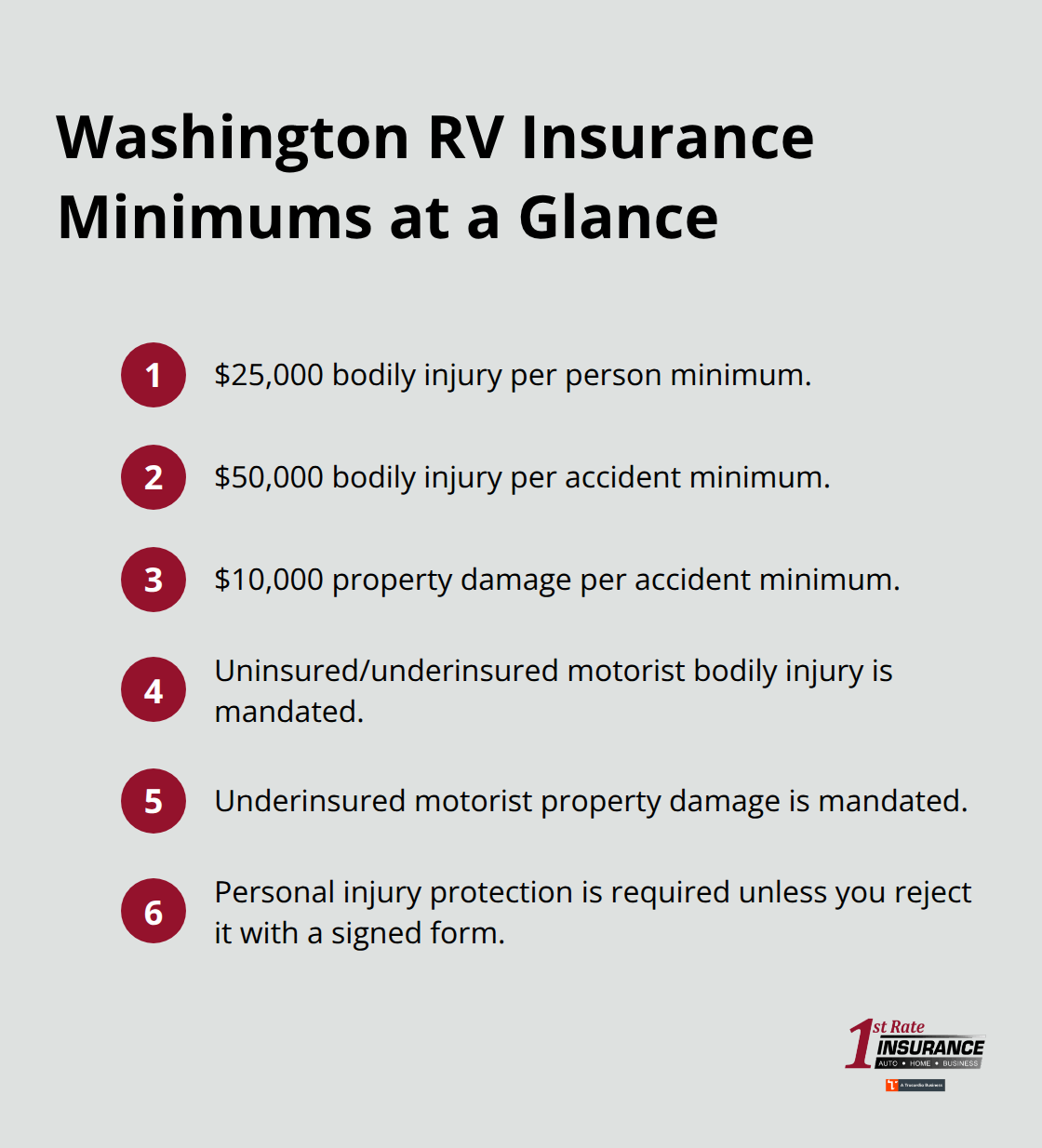
Washington law requires motorhome liability coverage of $25,000 per person and $50,000 per accident for bodily injury, plus $10,000 for property damage per accident. The state also mandates uninsured and underinsured motorist bodily injury coverage, underinsured motorist property damage coverage, and personal injury protection (though you can reject these with a signed form).
These requirements exist because RV accidents in Washington frequently involve multiple vehicles and substantial damages that exceed minimums. Travel trailer owners face different considerations since liability coverage attaches to the towing vehicle rather than the trailer itself, creating potential gaps in your auto policy when towing.
Why Liability Limits Matter More Than You Think
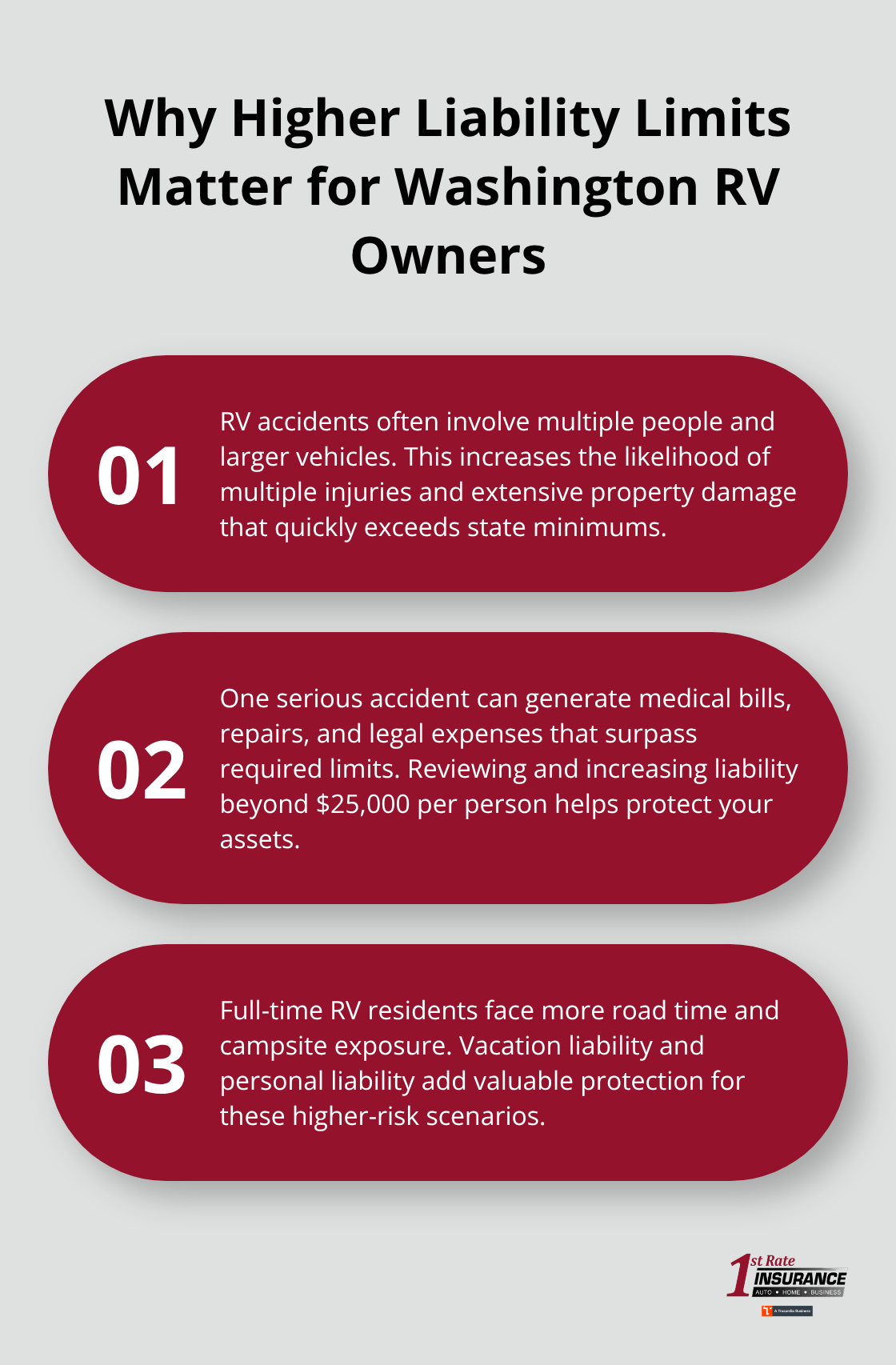
Liability claims from RV accidents escalate quickly because injuries often affect multiple people and property damage can be extensive. A single accident involving your motorhome could result in medical bills, vehicle repairs, and legal expenses that far exceed state minimums-which is why you should review your liability limits carefully and consider increases beyond the required $25,000 per person threshold. Full-time RV residents in Washington face additional exposure since they spend more time on the road and at campsites where liability incidents occur, making vacation liability coverage and personal liability protection valuable additions to a standard policy.
Financing Requirements and Insurance Costs
If you finance or lease your RV, lenders typically require comprehensive and collision coverage regardless of state minimums. The average cost of RV insurance in Washington runs about $824.12 annually for motorhomes and $403.21 for travel trailers according to Progressive data, though these figures vary significantly based on RV type, driving history, location within Washington, and coverage selections. Older or smaller RVs typically cost less to insure than newer, larger models, while your claims history and driving record directly affect your premium. Progressive offers liability-only motorhome policies starting around $125 per year, but actual costs depend on your specific situation and risk profile.
Shopping Multiple Carriers Reveals Real Savings
Rates for identical coverage differ substantially across carriers, making comparison shopping essential. Your RV type, usage patterns, and driving history all influence which carrier offers the best rate for your situation. Understanding these variables helps you identify the coverage that protects your investment while fitting your budget-and that’s where working with local agents who understand Washington roads and conditions becomes valuable for finding the right policy.
What Coverage Actually Protects Your RV
Physical Damage Protection: Comprehensive and Collision Coverage
Comprehensive and collision coverage form the foundation of physical damage protection for your motorhome or travel trailer, and Washington’s weather and terrain make both essential rather than optional. Comprehensive coverage pays for theft, vandalism, fire, weather damage, and collisions with animals-precisely the incidents that occur frequently on Washington roads and at Kirkland-area campgrounds. Collision coverage handles damage from accidents with other vehicles, trees, guardrails, or fixed objects, which represents a genuine threat when you navigate narrow mountain passes or back into tight camping spots. If you finance your RV, lenders require both coverages regardless of state law, but even if you own outright, skipping these protections exposes you to catastrophic loss. A single weather event or theft incident can total your RV, leaving you without a vehicle and without recourse if you carry only liability coverage.
Liability Coverage: Why State Minimums Leave You Exposed
Liability coverage protects you when you cause injury or property damage to others, but this is where most RV owners carry dangerously low limits. Washington requires $25,000 per person and $50,000 per accident for bodily injury, yet a serious motorhome accident involving multiple vehicles can generate medical bills and legal costs exceeding $100,000 within hours. Full-time RV residents face higher liability exposure since they spend more time on roads and at campsites, making vacation liability coverage a practical addition that protects you when your RV sits parked at a destination. Specialized full-timer policies available through carriers serving Washington include personal liability protection and loss assessment coverage up to approximately $5,000, addressing exposure that part-time RV users don’t face.
Travel Trailers and the Liability Gap
For travel trailer owners, liability attaches to the towing vehicle’s auto policy rather than the trailer itself, creating a critical gap-your auto insurance may not extend liability protection to injuries or damage occurring around a parked trailer at a campground. This distinction matters significantly because campsite incidents (a visitor slips on your trailer steps, or someone damages your trailer while parked) fall outside standard auto coverage. You should verify with your auto insurer whether your policy covers liability for a towed trailer, and if not, vacation liability coverage fills this protection gap affordably.
Medical Payments and Full-Timer Considerations
Medical payments coverage, typically available for $1,000 to $5,000 per person, covers medical bills for you and passengers after an accident regardless of fault, and this protection proves especially valuable for full-timers who spend extended periods traveling. Full-time RV residents in Washington benefit from reviewing these limits carefully with a licensed agent who understands Washington roads, as standard minimums leave you financially exposed in realistic accident scenarios. The right coverage combination protects both your investment and your financial security when you live on the road.
Picking the Right RV Insurance for Your Situation
Match Your Coverage to Your RV Type and Usage
Your RV type determines which coverage matters most and how much you’ll pay. A Class A motorhome costs substantially more to insure than a travel trailer because it’s self-propelled, larger, and represents greater liability exposure-Progressive data shows motorhomes average $1,052 annually while travel trailers run $594, though newer or larger models push these figures higher. If you finance your RV, lenders mandate comprehensive and collision coverage regardless of how often you drive, eliminating the choice to carry liability-only protection. Your usage pattern equally shapes insurance needs: full-time residents face year-round road exposure and campsite liability risks that part-time weekend travelers don’t encounter, justifying vacation liability coverage and higher personal liability limits for those living in their RV.
Consider Storage and Driving Habits
Storage habits matter significantly-an RV stored securely in your driveway between trips costs less to insure than one parked at a public campground where theft and vandalism occur regularly. Assess honestly whether you’re a weekend user, seasonal traveler, or full-time resident, then communicate this to your agent because it directly affects which coverage options you need and what you’ll pay. Your driving record, claims history, and RV’s age and value influence which carrier offers the best rate for your profile-a carrier that prices competitively for a 2015 motorhome might charge substantially more for a 2024 model.
Shop Multiple Carriers and Bundle for Savings
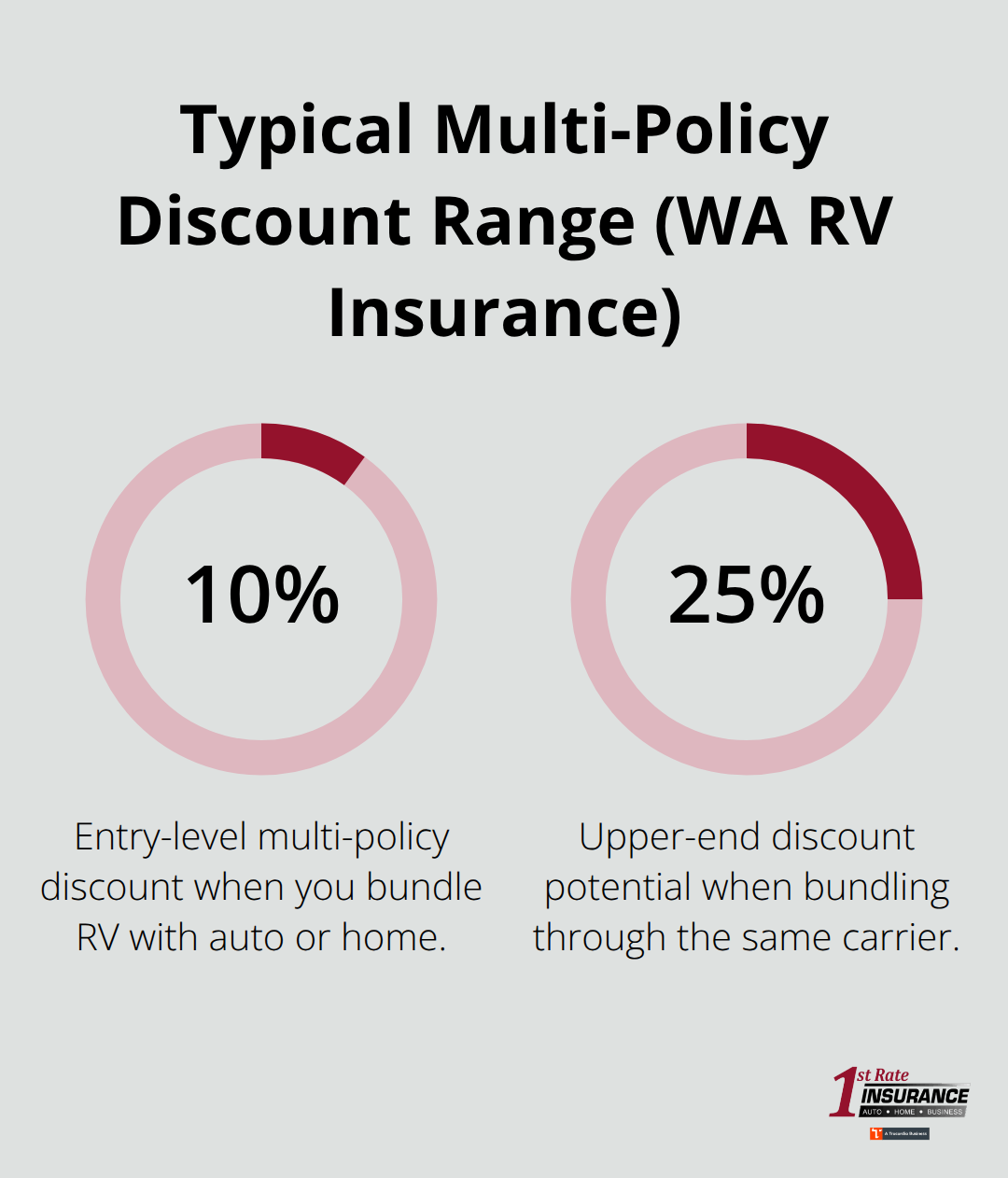
Comparing carriers reveals dramatic rate differences for identical coverage, making the shopping process non-negotiable. Bundling your RV policy with auto, home, or other coverages through the same carrier typically generates multi-policy discounts ranging from 10 to 25 percent, creating real savings compared to separate policies. Adjusting deductibles from $500 to $1,000 reduces your premium noticeably, though this only makes sense if you can afford the higher out-of-pocket cost when filing a claim.
Work With Local Agents Who Understand Washington Roads
Local agents who understand Washington roads understand which carriers price fairly for mountain driving, coastal routes, and weather-related risks specific to our region, avoiding generic online quotes that miss these nuances entirely. First Rate Insurance Plus, Inc. (a Kirkland-based agency) shops more than 20 carriers to deliver competitive pricing tailored to your specific situation, eliminating the frustration of calling multiple insurers yourself. Licensed agents in Washington can identify which carriers offer the best rates for your RV profile and help you navigate the coverage decisions that protect your investment without overpaying.
Final Thoughts
RV insurance in Kirkland, WA protects far more than your vehicle-it safeguards your financial security and legal standing on Washington roads. Comprehensive and collision coverage shield your motorhome or travel trailer from theft, weather damage, and accidents that occur regularly in our region, while liability coverage protects you when you cause injury or property damage to others. State minimums often fall dangerously short of realistic accident costs, making higher limits essential for full-time RV residents who face year-round exposure and campsite liability risks.
Shopping multiple carriers reveals dramatic rate differences for identical coverage, yet most RV owners never compare options beyond one or two quotes. Local agents who understand Washington roads, mountain passes, and coastal weather patterns identify which carriers price fairly for your specific situation rather than offering generic online quotes that miss regional nuances entirely. Bundling your RV policy with auto, home, or other coverages through the same carrier typically generates multi-policy discounts ranging from 10 to 25 percent, creating real savings compared to separate policies.
We at First Rate Insurance Plus, Inc. serve Kirkland with licensed agents who shop more than 20 carriers to deliver competitive pricing tailored to your RV profile. Contact us today to receive a customized quote for RV insurance Kirkland WA residents trust for award-winning service and competitive rates.
Disclaimer: The information provided in this blog is for general informational purposes only and does not constitute legal, financial, or insurance advice. Coverage options, terms, and availability may vary. Please consult with a licensed professional for advice specific to your situation. Artificial intelligence may have been used to generate text and images in some blog articles.
