
Low Deductible Landlord Policy: Cut Costs Without Compromising Coverage
Rental property owners face a constant tension: protect your investment without bleeding money on premiums. A low deductible landlord policy offers a practical solution to this problem.
We at First Rate Insurance Plus, Inc. know that the right deductible strategy can significantly reduce your out-of-pocket costs when claims happen. This guide walks you through how to balance coverage and affordability for your specific situation.
What Makes a Low Deductible Landlord Policy Different
A low deductible landlord policy is straightforward: you pay less out of pocket when a claim happens, but you pay more in premiums upfront. Most deductibles for landlord insurance range from $500 to $2,500, though some policies go lower. When you choose a $500 deductible instead of a $1,500 deductible, you commit to a higher annual premium in exchange for significantly reduced financial stress after a loss. The math works like this: if your rental property sustains $5,000 in fire damage and you have a $500 deductible, you pay $500 and the insurance company covers the remaining $4,500. With a $1,500 deductible, you’d pay $1,500 out of pocket instead. This difference matters most to landlords who operate with limited cash reserves or who own properties in high-risk areas prone to frequent claims.
The Premium Trade-Off
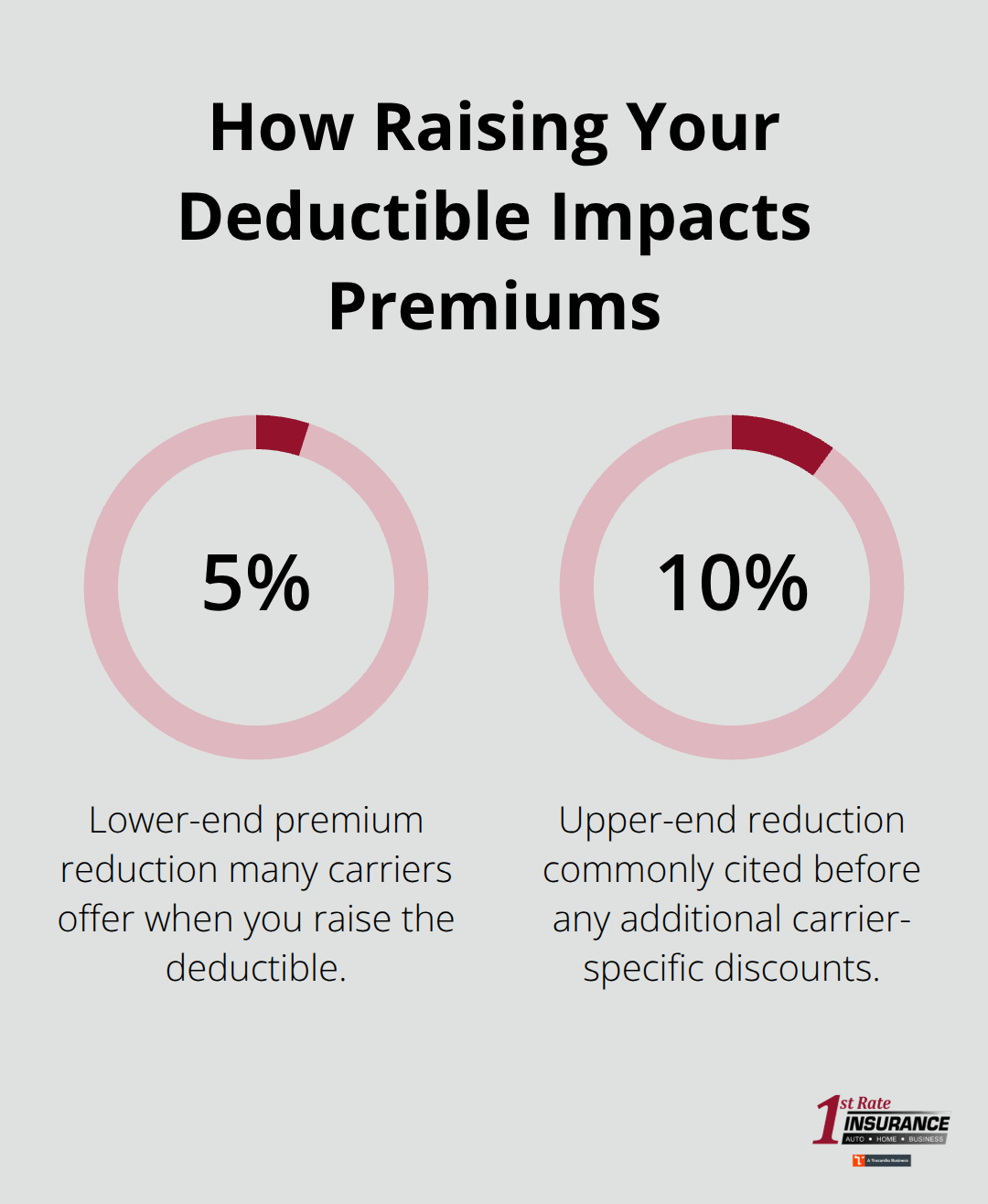
Raising your deductible from $500 to $1,000 or $2,000 can reduce your annual premium by 5% to 10% or more. This inverse relationship tempts many landlords to select high deductibles-the monthly savings feel immediate and tangible.
However, you should calculate your actual claims frequency before choosing based on premium alone. If you file multiple claims annually for water damage, theft, or tenant-caused accidents, a high deductible could cost you thousands more over time than the premium savings justify. A low deductible policy protects your cash flow in these scenarios by keeping your out-of-pocket expenses capped at $500 or $750 per incident.
What Low Deductible Policies Cover
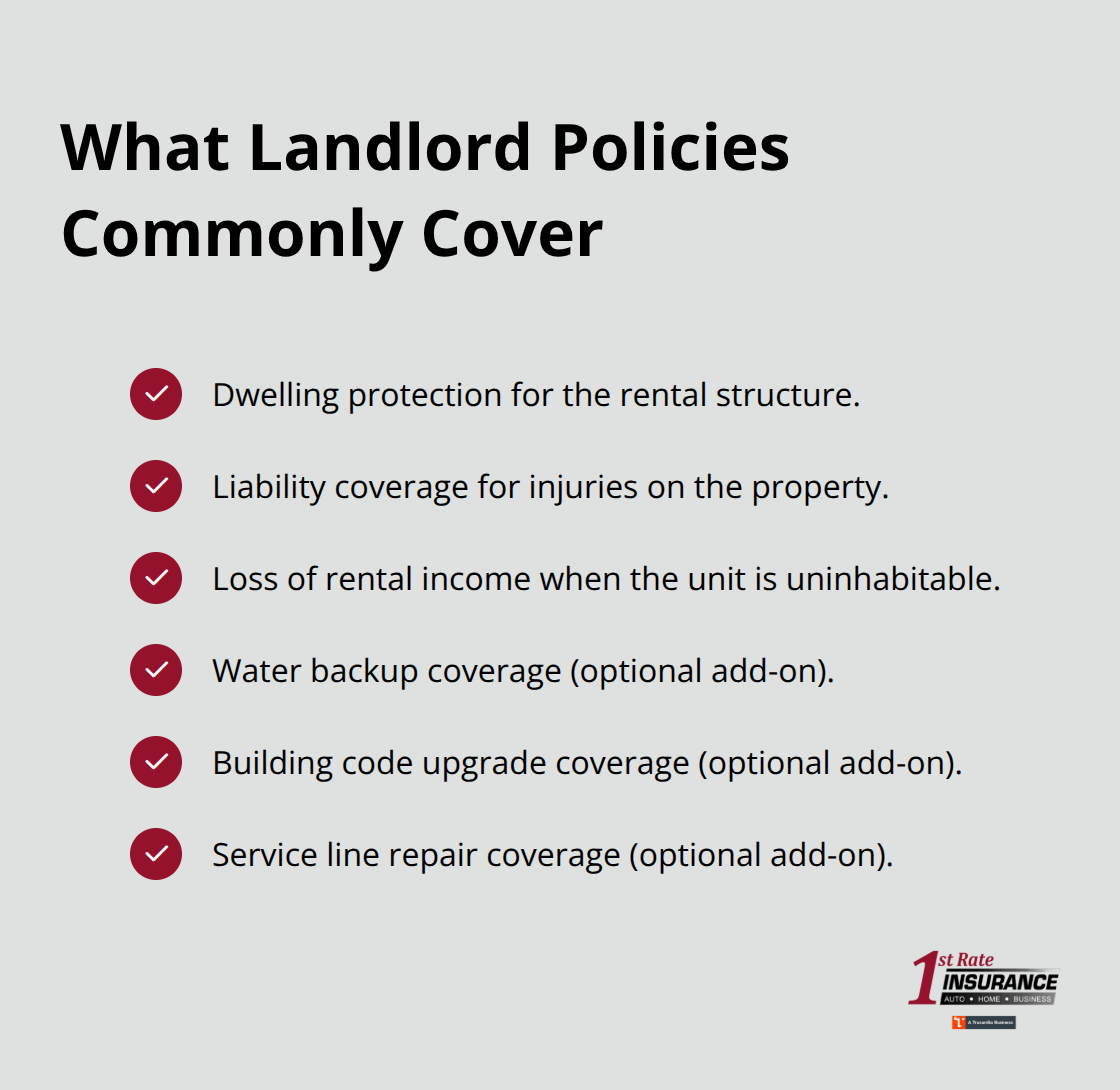
Standard landlord coverage includes dwelling protection for your rental structure, liability coverage if someone is injured on your property, and loss of rental income protection if the property becomes uninhabitable after a covered event. Additional options like water backup coverage, building code upgrades, and service line repairs can be added to your policy.
The key distinction from homeowners insurance is that landlord policies don’t cover your tenants’ personal belongings-they’re responsible for obtaining renters insurance-and they’re specifically designed for non-owner-occupied properties where tenant-related risks are higher.
How Your Property’s Risk Profile Shapes Deductible Decisions
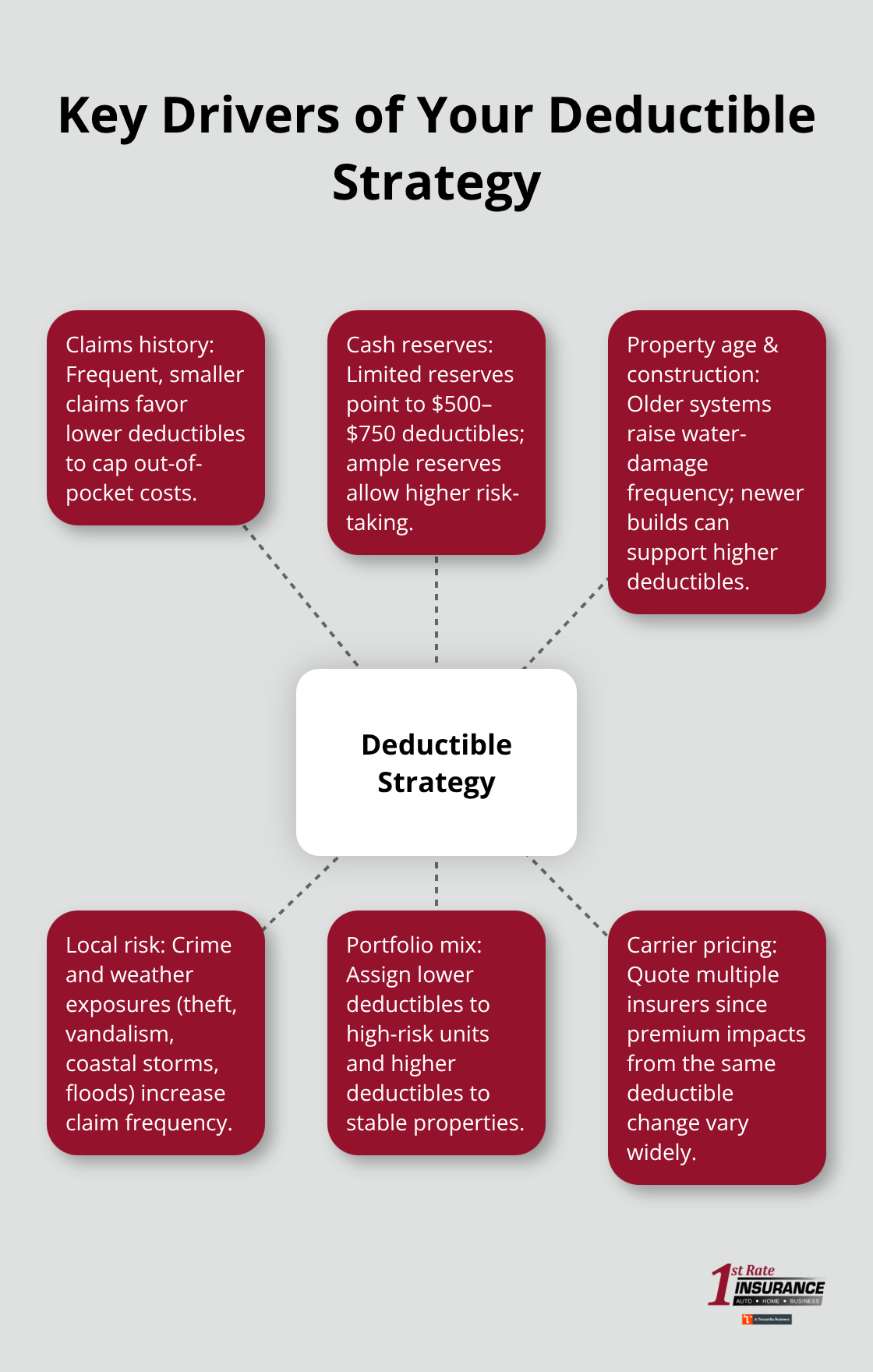
Properties in flood-prone or hurricane-prone regions face higher claim frequencies, which makes a low deductible strategy financially sound. A landlord who owns a property in a coastal area or near a river faces weather-related damage claims that a landlord in a stable climate may never experience. Your property’s age, construction materials, and local crime rates also influence how often you’ll file claims. Older buildings with outdated plumbing systems generate more water damage claims than newer construction. High-crime neighborhoods produce more theft and vandalism claims than low-crime areas. These factors should drive your deductible choice more than premium savings alone.
Comparing Deductible Amounts Across Your Portfolio
If you own multiple rental properties, your claims history across all units reveals patterns that shape your deductible strategy. One property might generate frequent small claims while another sits claim-free for years. Deductible adjustments can happen mid-term, so you can modify your strategy as your portfolio evolves. A landlord with three properties might select a $500 deductible on a high-risk unit and a $2,000 deductible on a stable property, balancing protection where it matters most with lower premiums where risk is minimal. This selective approach lets you optimize coverage without overpaying across your entire portfolio.
How Much Can You Actually Save With a Low Deductible
The financial reality of low deductible landlord policies contradicts what most landlords assume. You’ll pay more in annual premiums, but the question isn’t whether that’s true-it’s whether the tradeoff makes sense for your specific situation. Raising your deductible from $500 to $1,000 or $2,000 can reduce your annual premium by 5% to 10% or more. This sounds appealing until you calculate what actually happens when claims arrive. If your property sustains two water damage incidents annually at $3,000 each, a $500 deductible costs you $1,000 out of pocket per year. A $2,000 deductible costs you $4,000. The premium savings of perhaps $200 to $400 annually vanish immediately after the first claim. This is where most landlords make poor decisions-they optimize for premium savings rather than total cost of ownership.
Claims History Reveals Your True Deductible Strategy
Your claims history is the most reliable predictor of whether a low deductible makes financial sense. A landlord with three water damage claims in the past two years should absolutely select a $500 or $750 deductible, regardless of what the premium difference looks like. A landlord with zero claims in five years on a well-maintained property in a low-risk area might genuinely benefit from a $2,000 deductible. The trap lies in the middle-landlords who haven’t tracked their claims frequency or who own properties long enough to experience statistical variation. If you’ve owned the property for less than three years, you lack sufficient data to make this decision with confidence. In those cases, a moderate deductible of $1,000 to $1,500 provides reasonable protection while avoiding the premium penalty of the lowest options.
Request Multiple Quote Illustrations
When you compare quotes, request illustrations with at least three deductible levels so you see the actual dollar differences. A $100 annual premium difference between a $500 and $1,500 deductible might feel insignificant until you file a claim and face an extra $1,000 out-of-pocket expense. This comparison transforms abstract numbers into concrete financial decisions. Many landlords skip this step and later regret their deductible choice after their first claim arrives.
Cash Reserves Determine Your Deductible Flexibility
The deductible you choose only makes sense if you can actually afford to pay it when a loss occurs. Many landlords operate with minimal cash reserves, which makes this calculation critical. If your rental property generates $2,400 annually in net income and you select a $2,000 deductible, a single claim wipes out your entire year’s profit. This creates financial stress that undermines your ability to maintain the property or handle unexpected tenant issues. A low deductible of $500 or $750 protects your cash flow and prevents a single claim from destabilizing your investment.
Conversely, if you maintain six months of operating expenses in reserves, you have flexibility to absorb higher deductibles and capture premium savings. The question isn’t which deductible is objectively best-it’s which deductible aligns with your financial position and risk tolerance. Landlords with limited reserves should prioritize low deductibles. Landlords with substantial reserves can afford to take calculated risks with higher deductibles on stable properties.
Your cash position and claims patterns work together to shape the right deductible strategy. Once you’ve assessed both factors, the next step involves understanding how to structure your entire coverage package-not just the deductible-to protect your rental investment while keeping costs reasonable.
Finding Your Deductible Sweet Spot
Your property’s location and condition dictate which deductible actually protects your finances. A rental property in Seattle with aging plumbing generates water damage claims far more frequently than a newly constructed unit in Spokane, and your deductible choice should reflect this reality. Properties in high-risk zones for weather, theft, or tenant turnover justify lower deductibles because the claims will come.
Analyze Your Claim History
Start by reviewing your actual claim history from the past three to five years. Count the number of claims, their amounts, and whether patterns emerge around specific perils. If you filed two water damage claims averaging $2,500 each in the past two years, a $500 deductible costs you $1,000 annually in out-of-pocket expenses, while a $1,500 deductible costs you $3,000. The premium difference between these options rarely exceeds $300 to $400 annually, making the low deductible mathematically superior for your situation.
Property Age and Construction Standards
Property age matters significantly. Buildings constructed before 1980 with original plumbing systems face substantially higher water damage frequency than post-2000 construction. If your property falls into this category, selecting anything above a $750 deductible creates unnecessary financial risk. Newer buildings with updated systems and modern materials experience fewer claims overall, which allows you to consider higher deductibles without the same exposure.
Local Risk Factors Shape Your Decision
Local crime statistics influence your deductible choice directly. Properties in neighborhoods with theft and vandalism rates above the city average should carry $500 or $750 deductibles to handle frequent small claims without depleting cash reserves. Weather patterns matter equally-properties in coastal areas or flood-prone regions face higher claim frequencies than inland locations with stable conditions.
Standard Deductible Amounts and Selection Strategy
The deductible amounts you encounter in quotes typically cluster around $500, $750, $1,000, $1,500, and $2,000, though some insurers offer $250 options. A $500 deductible represents the practical floor for most landlords because the premium savings from lower amounts shrink dramatically while still protecting you meaningfully after claims occur. Properties with zero claims in five years can reasonably consider $1,500 deductibles if they maintain three to six months of operating expenses in reserves, but this strategy only works if your property remains stable. The moment your tenant situation changes, your property ages further, or local conditions shift, that assumption collapses.
Deductible adjustments happen mid-term without penalty at most carriers, so you can modify your strategy as conditions warrant. If you own multiple properties, avoid selecting identical deductibles across your portfolio. A primary property generating $1,200 monthly in rent and showing zero claims should carry a different deductible than a secondary property with a recent fire or water damage incident. Selective deductible placement lets you keep premiums reasonable on stable properties while protecting cash flow on high-risk units.
Shop Multiple Carriers for Competitive Pricing
Request quotes from at least three carriers with your preferred deductible to understand competitive pricing, because the premium impact of deductible selection varies significantly between insurers. One carrier might charge $150 more annually for dropping from $1,000 to $500, while another charges $300 for the same change. This variation makes shopping essential rather than optional.
Final Thoughts
A low deductible landlord policy protects your rental investment by capping your out-of-pocket expenses when claims happen. Your property’s claims history, available cash reserves, and local risk environment determine whether a $500 or $750 deductible makes financial sense despite higher premiums. The premium savings from choosing a $2,000 deductible vanish immediately after your first claim if you weren’t prepared for that expense.
Coverage quality matters as much as cost because an inadequate deductible creates financial stress that undermines your ability to maintain your property and respond to tenant issues. A landlord facing a $2,000 out-of-pocket expense after water damage may delay necessary repairs or skip maintenance that prevents future claims. Standard landlord coverage includes dwelling protection, liability coverage, and loss of rental income protection, but your deductible choice determines whether these coverages actually protect your finances.
Request quotes from multiple carriers with at least three deductible levels so you see actual dollar differences rather than abstract percentages. Compare the same coverage limits and types across carriers because deductible impact varies significantly between insurers. Contact First Rate Insurance Plus, Inc. to request quotes with your preferred deductible and discover how much you can save without compromising the coverage your rental property needs.
Disclaimer: The information provided in this blog is for general informational purposes only and does not constitute legal, financial, or insurance advice. Coverage options, terms, and availability may vary. Please consult with a licensed professional for advice specific to your situation. Artificial intelligence may have been used to generate text and images in some blog articles.