
Flood and Earthquake Package: Protecting Your Home From Weather‑Related Disasters
Washington homeowners face two major threats that standard insurance policies simply don’t cover: flooding and earthquakes. Both disasters strike our state regularly, yet most people remain dangerously underprotected.
A flood and earthquake package fills this gap, giving you the protection your home actually needs. We at First Rate Insurance Plus, Inc. help homeowners understand what coverage works best for their specific situation.
Why Washington Homeowners Face Real Disaster Risks
The Cascadia Subduction Zone Threat
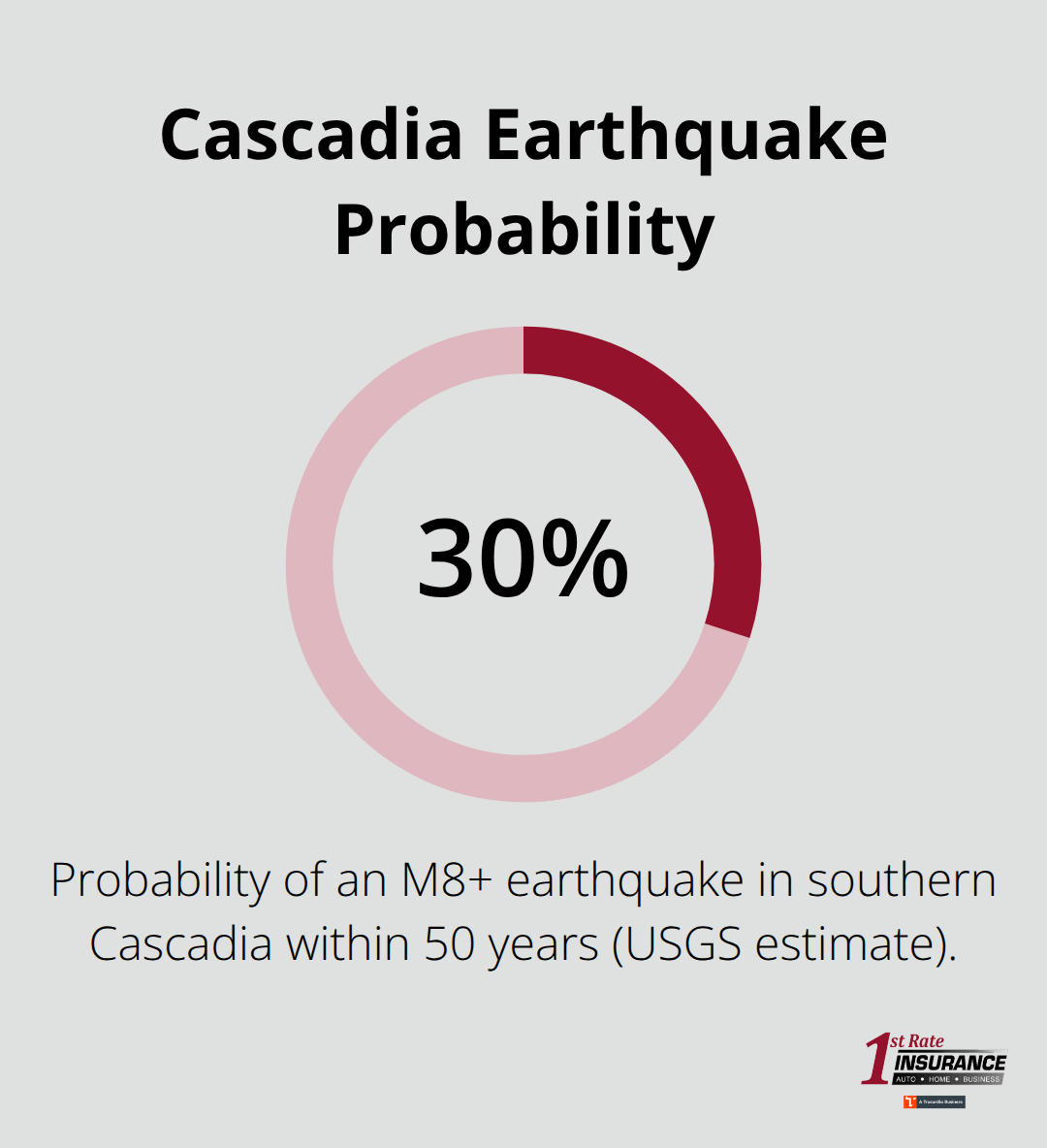
Washington’s geography places homeowners directly in the path of one of North America’s most dangerous earthquake zones. The Cascadia Subduction Zone runs off our coast, and the U.S. Geological Survey warns that a major earthquake here could trigger a tsunami and cause widespread damage across western Washington. Scientists estimate an approximately 30-percent chance of an M8+ earthquake occurring in southern Cascadia in the next 50 years. This isn’t a remote possibility-it’s a statistical reality that affects every property owner in our state.
Flooding Has Become Washington’s New Normal
Flooding strikes Washington far more frequently than most homeowners realize. The National Oceanic and Atmospheric Administration reports that Washington experienced 18 federally declared flood disasters between 2000 and 2020, with major events in 2007, 2009, and 2017 causing hundreds of millions in damage. These aren’t isolated incidents separated by decades. They represent a pattern of increasing water-related disasters that affect communities across the state.
Standard Insurance Leaves You Completely Exposed
Most homeowners believe their standard policy protects them from all major disasters. This assumption costs people everything. Standard homeowners insurance explicitly excludes both earthquake and flood damage-your typical policy covers fire, theft, and weather events like wind and hail, but the moment water rises or the ground shakes, you’re on your own financially. Insurance companies carved out these exclusions precisely because the financial exposure is so massive. A single major earthquake or flood event could bankrupt an insurer, so they pass that risk entirely to property owners.
The Real Cost of Being Unprotected
This coverage gap leaves Washington homeowners facing devastating financial consequences. When the 2007 Chehalis River flooding hit communities across Lewis and Thurston counties, homeowners without flood insurance lost tens of thousands of dollars with no recovery path. The same applies to earthquake damage-even in low-risk areas, a moderate quake cracks foundations, damages electrical systems, and destroys belongings. Standard insurance won’t cover any of it. Your home represents your largest financial asset, and leaving it exposed to these predictable regional disasters creates unnecessary financial vulnerability.
Closing the Protection Gap
A targeted flood and earthquake package restores the financial security that standard policies abandon. These specialized coverages address the specific threats that Washington homeowners actually face, protecting both your structure and your belongings when disaster strikes. Understanding what protection options exist-and how they work together-allows you to make informed decisions about your family’s financial future.
What Your Flood and Earthquake Package Actually Covers
How Flood Insurance Protects Your Home
Flood insurance and earthquake insurance operate independently, each protecting against specific disaster types with distinct coverage limits and exclusions. Flood policies protect your home’s structure, built-in systems, and personal belongings when water damage occurs. The National Flood Insurance Program, the primary flood carrier option, provides Building Property Coverage that protects walls, foundations, electrical systems, and plumbing up to your chosen limit. Contents Coverage reimburses personal belongings separately, with Replacement Cost Coverage paying full replacement value without depreciation-critical for protecting furniture, electronics, and clothing.
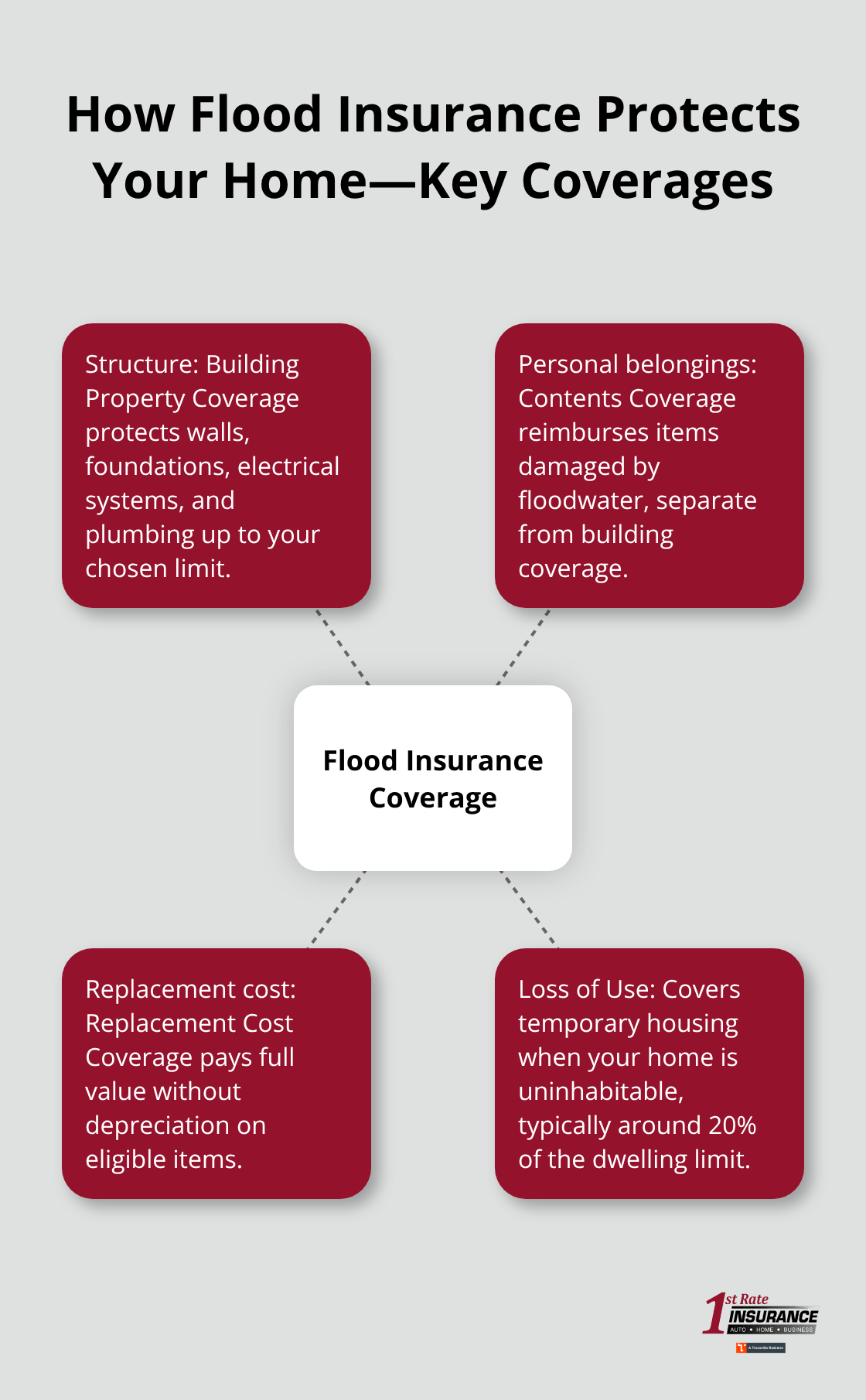
Loss of Use coverage reimburses temporary housing expenses if your home becomes uninhabitable, typically covering 20 percent of your dwelling coverage limit.
How Earthquake Insurance Protects Your Home
Earthquake policies work differently, covering dwelling repair or rebuild costs after ground shakes damage your foundation, walls, or roof. Personal Property Coverage under earthquake insurance reimburses destroyed belongings, and Loss of Use provides temporary living expenses during repairs. Earthquake premiums vary significantly based on your property’s location, construction type, and chosen deductible-Washington homeowners in higher-risk zones near the Cascadia Subduction Zone pay more, but this protection becomes non-negotiable given the 30-percent chance of a major quake in the next 50 years.
Additional Protections That Fill Critical Gaps
Beyond basic coverage, additional protections address specific vulnerabilities most homeowners overlook. Debris Removal Coverage pays for clearing earthquake or flood debris from your property, a cost that reaches tens of thousands of dollars after major disasters. Ordinance or Law Coverage helps cover increased rebuilding costs when updated building codes require stronger construction standards after damage-without this endorsement, you pay the difference from your own pocket. Enhanced Contents Coverage increases limits for high-value items like jewelry, art, or collectibles that standard policies severely restrict. Business Interruption Insurance compensates for lost income if a disaster interrupts rental income from a property you lease to tenants.
Customizing Your Coverage to Match Your Property
Evaluate whether your home qualifies for these add-ons based on your property’s age, location, and whether you have rental income. A 30-day waiting period applies to most new flood policies before coverage activates, so you should purchase coverage before flood season arrives. Customizing your package to match your property’s specific value, location, and vulnerability creates comprehensive protection rather than relying on generic limits that may leave you underinsured. Once you understand what coverage options exist, the next step involves assessing your specific property’s actual risk level and determining which limits make financial sense for your situation.
Matching Coverage to Your Home’s Actual Risk
Assess Your Flood Risk First
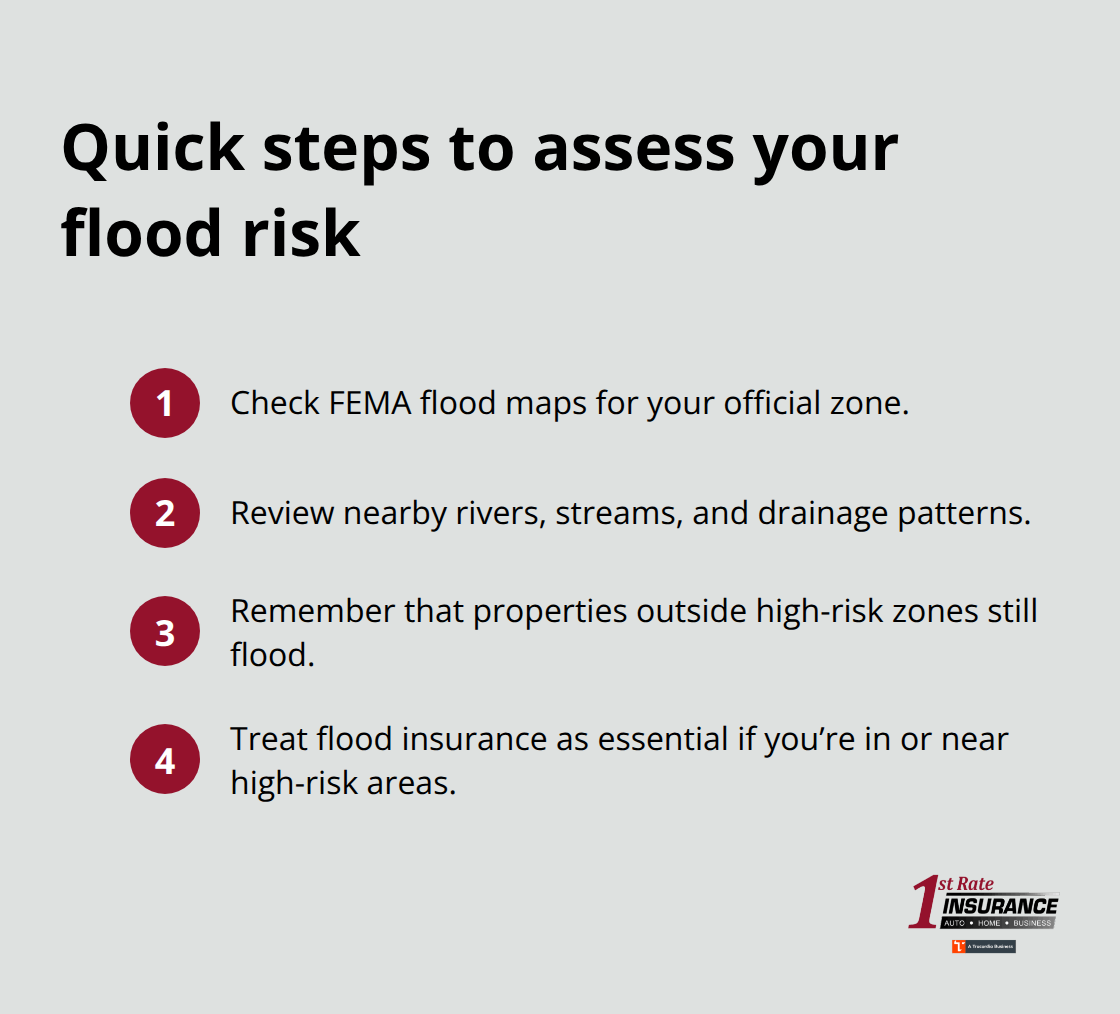
Start with your flood risk because it’s the easiest to quantify and the most urgent. Visit the FEMA flood maps online and enter your address to determine your property’s official flood zone designation. Properties outside designated flood zones still flood regularly-in fact, almost one third of National Flood Insurance claims come from areas located outside of high-risk areas. If your home sits within a high-risk zone or near rivers, streams, or drainage patterns, flood insurance isn’t optional.
Calculate the Financial Case for Flood Coverage
If you’re in a moderate-risk area, the decision becomes financial: a moderate flood event costs $30,000 to $100,000 in water damage to structure and contents, while annual flood insurance premiums typically run $400 to $1,200 depending on your coverage limits. That math strongly favors purchasing coverage. For earthquake risk, check the U.S. Geological Survey’s earthquake hazard data for your specific address. Washington properties near the Cascadia Subduction Zone face higher premiums, but the 30-percent probability of a major earthquake in the next 50 years makes this risk impossible to ignore regardless of location.
Evaluate Earthquake Exposure Across Washington
Closer proximity to the Cascadia Subduction Zone means higher premiums, but distance doesn’t eliminate the threat-even moderate earthquakes cause foundation cracks, electrical damage, and destroyed belongings that standard insurance won’t touch. The risk exists statewide, making earthquake coverage a practical necessity rather than an optional luxury for Washington homeowners.
Set Dwelling Coverage to Match Replacement Cost
Determining your coverage limits requires honest assessment of your home’s replacement cost, not its market value. A $500,000 home might cost $600,000 to rebuild after total destruction because labor and materials fluctuate. Contact local contractors or use the National Association of Home Builders cost estimator to establish realistic rebuild expenses. Set your dwelling coverage limit to match this replacement cost figure-underinsuring by 20 percent means you absorb that percentage of losses yourself.
Inventory Personal Property and Choose the Right Deductible
For contents coverage, photograph and inventory your belongings, then add up their replacement value. Most people drastically underestimate this number; a typical three-bedroom home contains $40,000 to $60,000 in personal property. Choose Replacement Cost Coverage over Actual Cash Value because depreciation penalties devastate your recovery. On deductibles, higher deductibles lower premiums significantly-jumping from $500 to $2,500 might reduce your annual cost by 30 to 40 percent. This makes sense only if you can actually afford to pay that deductible after a disaster. Try keeping deductibles at a level you could cover with available savings, not at a level that creates financial hardship if claimed. Consider Loss of Use coverage at 20 to 30 percent of your dwelling limit-temporary housing after a major disaster costs far more than most people anticipate, often reaching $5,000 to $8,000 monthly in Washington’s rental markets.
Final Thoughts
Washington homeowners face two predictable regional threats that standard policies abandon: flooding strikes our state regularly with 18 federally declared disasters between 2000 and 2020, while the Cascadia Subduction Zone carries a 30-percent probability of a major earthquake within the next 50 years. A flood and earthquake package addresses these specific vulnerabilities by protecting both your structure and belongings when disaster strikes. Your protection strategy starts with assessing your actual flood risk using FEMA maps, then evaluating your earthquake exposure based on proximity to the Cascadia Subduction Zone.
Set your dwelling coverage to match realistic replacement costs rather than your home’s market value, inventory your personal property carefully, and choose Replacement Cost Coverage over Actual Cash Value to avoid depreciation penalties. Select deductibles you can actually afford to pay after a disaster, and add Loss of Use coverage at 20 to 30 percent of your dwelling limit since temporary housing costs far exceed what most people anticipate. The financial case for coverage proves straightforward: a moderate flood event costs $30,000 to $100,000 in damage while annual premiums run $400 to $1,200, and earthquake premiums vary by location but the 30-percent probability of a major quake makes this protection non-negotiable across Washington.
We at First Rate Insurance Plus, Inc. help Washington homeowners navigate these decisions with clarity and confidence by shopping more than 20 carriers to find competitive pricing and coverage tailored to your specific property. Contact us today for a free quote and personalized guidance on building the flood and earthquake package your home actually needs.
Disclaimer: The information provided in this blog is for general informational purposes only and does not constitute legal, financial, or insurance advice. Coverage options, terms, and availability may vary. Please consult with a licensed professional for advice specific to your situation. Artificial intelligence may have been used to generate text and images in some blog articles.
