
Redmond Landlord Insurance Options: Tailored Coverage For Rental Properties
Owning rental properties in Redmond comes with real financial exposure. One accident, one vacancy, or one weather event can wipe out months of rental income.
We at First Rate Insurance Plus, Inc. know that standard homeowners policies don’t protect landlords. You need Redmond landlord insurance options built specifically for the risks you face as a property owner.
What Landlord Insurance Actually Covers
Three Financial Threats Rental Property Owners Face
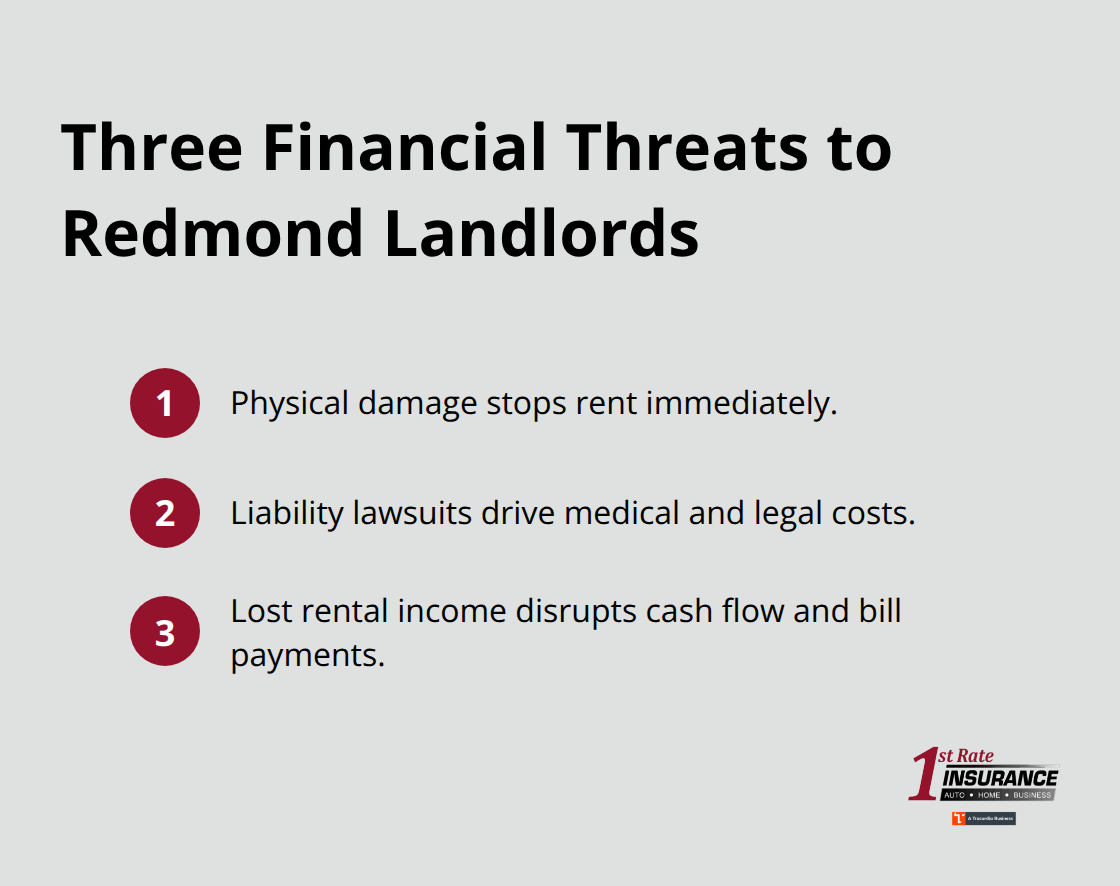
Rental property owners in Redmond face three distinct financial threats that standard homeowners policies ignore completely. Physical damage to the building itself-fires, theft, or vandalism-makes the property uninhabitable and stops your income immediately. Liability exposure strikes when someone gets injured on your property and sues you for medical bills and damages. Lost rental income hits when tenants move out or can’t pay, leaving you without cash flow while you still owe the mortgage and property taxes.
Dwelling Fire Insurance Protects Your Building
Dwelling fire insurance protects the structure of your rental property, including the roof, walls, flooring, and built-in appliances. This coverage pays to rebuild or repair the building after fire, wind, hail, or theft, but it does not cover the tenant’s belongings or lost rent while repairs happen. A major fire or storm would leave landlords facing significant out-of-pocket costs that could exceed tens of thousands of dollars.
Liability Coverage Protects Your Bank Account
Liability coverage is separate from dwelling protection and covers medical bills and legal fees if a tenant or visitor sues you after an injury on the property. A slip-and-fall lawsuit in Washington can easily exceed $100,000 in damages, which is why most landlords need at least $300,000 in liability protection. This single coverage type stands between you and financial ruin when accidents happen on your rental units.
Loss of Rent Coverage Keeps Your Cash Flow Stable
Loss of rent coverage-also called loss of rents or rental income coverage-replaces your monthly rent during periods when the property is unrentable due to a covered loss. If a fire makes your duplex uninhabitable for three months, this coverage pays your mortgage and keeps your business solvent while repairs happen. Without this protection, you’d drain your savings or take on debt just to stay current on property obligations.
Evaluating Your Coverage Needs
Each of these three coverages operates under different rules and has different payout limits (dwelling protection, liability defense, and income replacement). Landlords who treat these as separate decisions often end up with gaps that cost them thousands when claims happen. The next section shows how to compare actual policies in Redmond and spot the differences between providers that matter most to your rental business.
Comparing Landlord Insurance Policies in Redmond
Standard landlord policies in Washington typically start with dwelling coverage limits between $200,000 and $500,000, though Redmond’s construction costs often push landlords toward the higher end. Liability limits commonly run $300,000 to $500,000 per occurrence, with loss of rent coverage capped at 12 to 24 months of projected rental income. The real difference between policies emerges in what gets excluded. Most carriers exclude water damage from burst pipes unless you add a specific endorsement, and virtually none cover tenant-caused damage without an additional rider. Loss of rent coverage often has a waiting period of 14 to 30 days before payments start, meaning a fire on day one doesn’t generate income replacement checks until mid-month. When you request quotes from three different providers, you’ll notice one might offer $350,000 dwelling coverage with a $1,000 deductible while another offers $400,000 with a $2,500 deductible-the lower deductible sounds better until you realize it raises your annual premium by 15 to 20 percent. Washington state requires landlords to carry liability coverage, but there’s no minimum amount specified by law, which means carriers set their own thresholds. Most policies exclude loss of rent if tenants break their lease and move out voluntarily, covering only losses from damage that makes the unit unrentable.
What Endorsements Actually Matter for Redmond Rentals
Specialty endorsements transform a basic policy into real protection for your rental business. An equipment breakdown rider covers your furnace, water heater, or HVAC system failing, which happens frequently in older Redmond properties and would otherwise drain thousands from your pocket. Vandalism coverage specifically protects against tenant-caused damage beyond normal wear and tear, a critical gap since standard policies often exclude intentional damage.
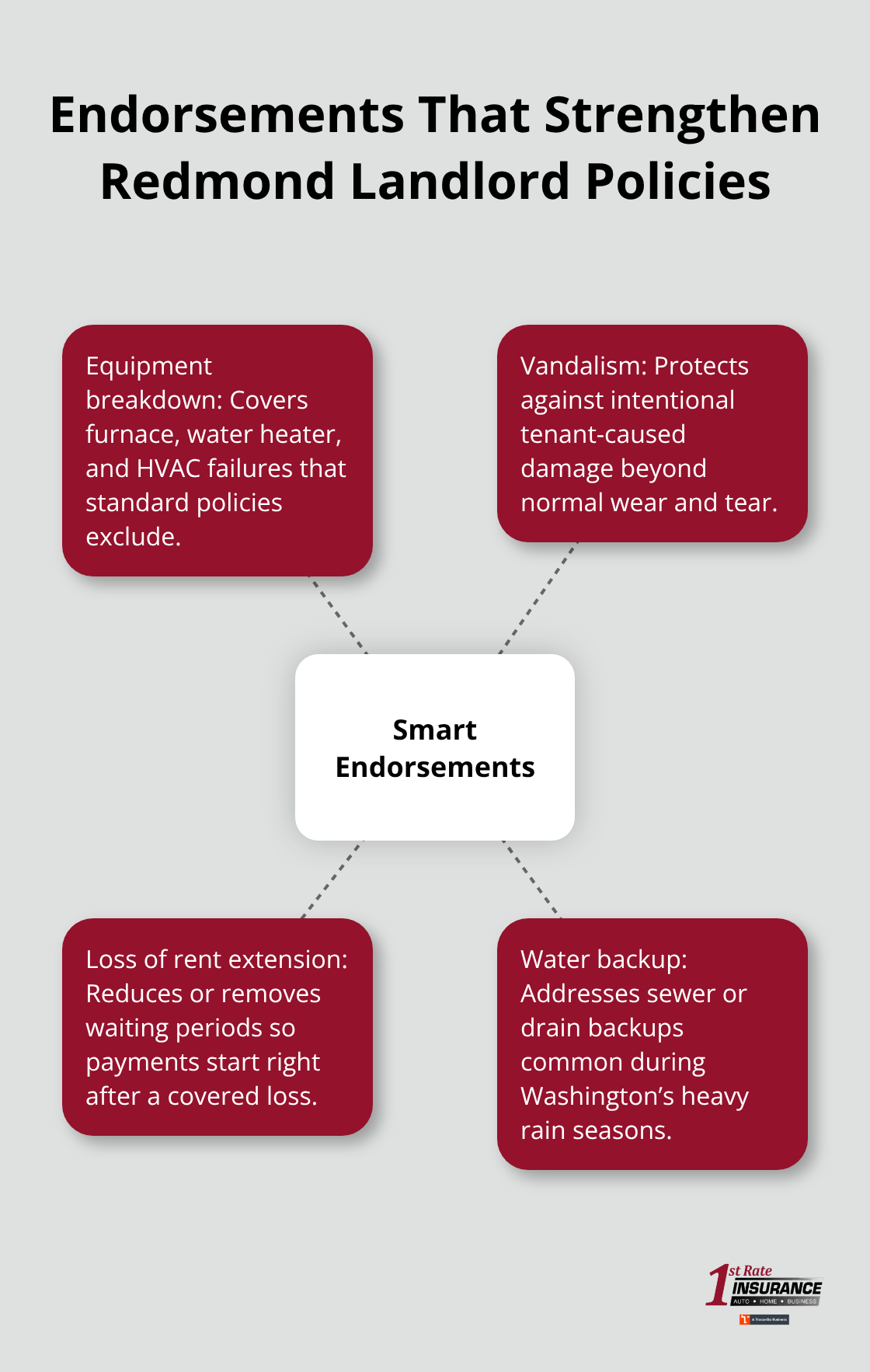
Loss of rent extension endorsements remove or extend the waiting period, meaning coverage starts immediately after a covered loss rather than waiting two to four weeks. Water backup coverage addresses sewer or drain backup, a surprisingly common claim in Washington properties during heavy rain seasons. Most carriers charge $15 to $40 monthly for each endorsement, but skipping them leaves you exposed to catastrophic out-of-pocket costs. We recommend reviewing which endorsements apply to your specific property age, tenant profile, and local weather patterns rather than adding blanket coverage you won’t use.
Getting Actual Numbers from Multiple Quotes
Request quotes from at least three carriers and specify identical coverage across all quotes-same dwelling limit, same liability amount, same loss of rent period, and the same deductible. This eliminates the confusion that comes from comparing apples to oranges. Ask each carrier for their specific exclusions in writing and their claims handling timeline, since a $50-per-month savings disappears fast if claims take six months to process. Many carriers offer multi-policy discounts if you bundle your rental property insurance with auto or home coverage, potentially saving 10 to 25 percent on your landlord premium. Washington landlords often find that online-only carriers quote 10 to 15 percent lower than traditional agencies, but they typically offer no local support and deny claims at higher rates than regional carriers. Try requesting quotes for both standard policies and high-value or specialty landlord packages if you own multiple units or have properties valued above $750,000. The cheapest quote rarely delivers the best protection-focus instead on the combination of coverage limits, endorsement options, and claims reputation that matches your actual risk exposure.
How Coverage Gaps Create Real Financial Exposure
Most landlords discover their policy gaps only after a claim happens, which is far too late. A tenant injury that results in a $150,000 lawsuit exposes you immediately if your liability limit sits at $100,000 (the difference comes from your personal assets). Equipment breakdown claims often get denied because landlords assumed their dwelling coverage included mechanical failures, when in fact it covers only sudden, accidental damage. Loss of rent claims fail when landlords can’t prove their actual monthly income, since carriers require documentation of rent collected over the previous 12 months. Water damage from a burst pipe might be excluded entirely unless you purchased that specific endorsement, leaving you to cover repair costs that frequently exceed $10,000. These gaps don’t appear in policy documents until you file a claim and receive a denial letter. The next section shows you exactly which gaps appear most often in Redmond rental properties and how to fill them before they cost you money.
Common Gaps in Landlord Coverage and How to Fill Them
Tenant-Related Liability Exposures
Tenant injuries create liability exposure that most landlords severely underestimate. A guest slips on ice in your rental’s entryway or a tenant’s child falls from a balcony, and medical bills, lost wages claims, and legal fees pile up fast. Standard liability policies also exclude injuries caused by tenant negligence, meaning if your tenant fails to maintain the property and someone gets hurt, you face the full financial burden personally.
Assault or battery claims create additional gaps-if a tenant attacks someone on the property, liability coverage often denies the claim entirely because it’s considered an intentional act rather than an accident. You need at least $300,000 in liability protection for a single-unit rental and $500,000 or higher if you own multiple properties or rent to groups. Some carriers offer assault and battery endorsements for $20 to $50 annually that restore coverage for these specific scenarios, but you must request them explicitly since they don’t come standard.
Natural Disasters and Weather Events
Washington experiences heavy rain seasons that cause sewer backups, flooding, and water intrusion into basements-standard landlord policies exclude these losses unless you purchase separate water backup coverage. Hail damage claims get denied frequently because landlords fail to document the damage within 48 hours or fail to obtain written estimates before repairs begin. Wind damage to roofs often gets denied when insurers argue the damage resulted from poor maintenance rather than the windstorm itself, forcing you to prove you maintained the property properly.
Equipment breakdown coverage matters significantly in Redmond’s older rental stock, where furnaces and water heaters fail regularly. A failed water heater in January costs $1,500 to $2,500 for replacement, and standard policies won’t cover it unless you add mechanical breakdown protection. Loss of rent coverage includes waiting periods that create cash flow problems-if a storm damages your property on a Monday, most policies don’t start paying your lost rent until 14 to 30 days later, meaning you absorb two to four weeks of mortgage and tax payments yourself.
Maintenance and Repair Cost Protection
Maintenance and repair cost protection gaps appear when landlords assume their dwelling coverage includes ongoing maintenance expenses. It doesn’t. Roof repairs from age-related deterioration, foundation repairs, or pest damage fall entirely on you because insurance covers sudden, accidental damage only. Many Redmond properties built before 1980 develop plumbing issues and foundation settling that insurers classify as maintenance rather than covered losses.
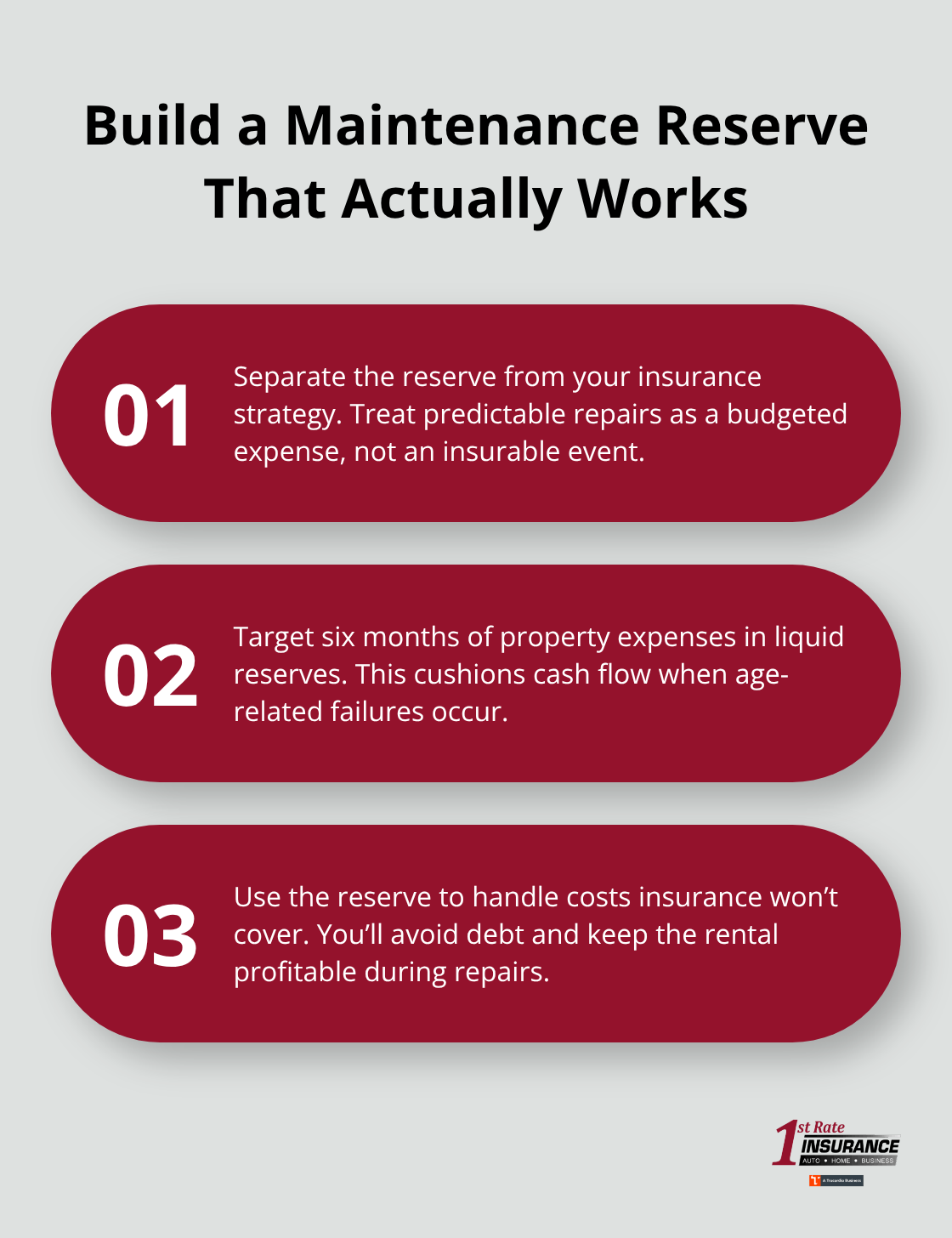
You need a separate maintenance reserve fund (distinct from your insurance strategy) to handle these predictable costs without derailing your cash flow. Most experienced landlords maintain six months of property expenses in liquid reserves to cover maintenance costs that insurance won’t touch. This approach protects your rental business when age-related failures hit your properties.
Final Thoughts
Selecting the right Redmond landlord insurance options requires matching your coverage to the specific risks your rental properties face. Dwelling protection, liability coverage, and loss of rent protection operate independently, and gaps in any one area cost you tens of thousands of dollars when claims happen. The endorsements that matter most depend on your property’s age, location, and tenant profile-equipment breakdown coverage matters more for older homes, while water backup protection becomes critical during Washington’s rainy seasons.
Request quotes from at least three carriers using identical coverage specifications across all quotes to reveal the real price differences and which carriers offer the endorsements your properties actually need. Document your current rental income for the past 12 months before requesting loss of rent quotes, since carriers require this proof when processing claims. Ask each carrier about their claims handling timeline and request their exclusions in writing, because the cheapest premium means nothing if the company denies your claim six months later.
Regional carriers understand Washington’s specific weather patterns, local building codes, and common claim scenarios that national online-only companies miss entirely. They also process claims faster and deny them less frequently than carriers operating from out of state. Contact First Rate Insurance Plus, Inc. to review your current coverage and identify the protection gaps in your rental portfolio.
Disclaimer: The information provided in this blog is for general informational purposes only and does not constitute legal, financial, or insurance advice. Coverage options, terms, and availability may vary. Please consult with a licensed professional for advice specific to your situation. Artificial intelligence may have been used to generate text and images in some blog articles.
