

Bothell RV Insurance Quotes: Find The Best RV Coverage
RVing through Washington’s scenic routes comes with real responsibilities, especially when it comes to insurance. At First Rate Insurance Plus, Inc., we know that finding the right Bothell RV insurance quotes can feel overwhelming with so many options available.
Whether you’re a weekend adventurer or planning to live full-time in your RV, understanding your coverage options protects both your investment and your peace of mind. Let’s walk through what you need to know to get the best protection for your rig.
Why RV Insurance Matters in Washington
Washington state requires all RV owners to carry liability insurance, with minimum liability coverage requirements in Washington state of $25,000 for bodily injury per person and $50,000 per accident, according to Washington’s Department of Licensing. These aren’t suggestions-they’re legal mandates. Operating an RV without proper liability coverage exposes you to serious financial consequences, including license suspension and fines up to $1,000. Liability coverage protects your personal assets if you cause an accident that injures someone or damages their property. Many RV owners underestimate how quickly medical bills and property repairs can exceed their coverage limits, which is why careful review of your limits matters far more than settling for state minimums.
Protecting Your Investment from Theft and Weather
Theft and weather damage represent the biggest financial risks to RV owners in the Bothell area. According to the National Insurance Crime Bureau, travel trailers experience theft rates significantly higher than other vehicle types, with thieves targeting valuable equipment like generators, air conditioning units, and towing components. Comprehensive coverage protects against theft, vandalism, hail, wind, and water damage-critical given Washington’s rainy climate and occasional severe weather events. Full-time RV residents face additional exposure since their homes sit unattended for extended periods. Collision coverage handles accidents and rollovers, though many part-time RV users overlook this protection when storing their rigs.
Medical Payments and Roadside Support
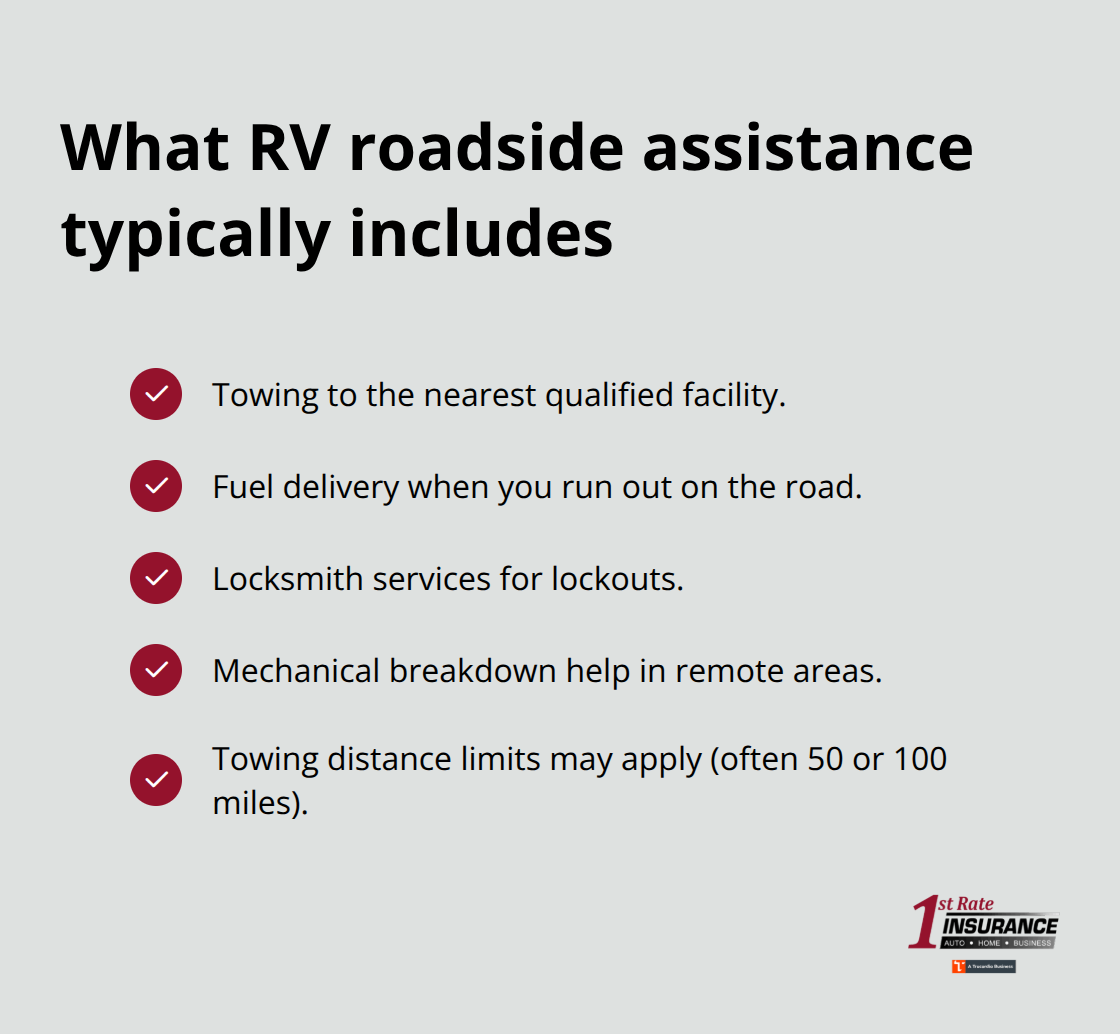
Medical payments coverage handles injuries to you and your passengers regardless of fault, covering everything from treatment at roadside clinics to emergency transportation. This matters more for full-time RVers who spend months away from their regular healthcare providers. Emergency roadside assistance covers towing, fuel delivery, locksmith services, and mechanical breakdowns-critical when you’re stranded in remote Washington locations. Some carriers offer unlimited towing through partnerships with roadside service networks, while others cap distances at 50 or 100 miles (making plan selection important based on your travel patterns).
Coverage Gaps That Cost RV Owners Money
Full-time RV living introduces coverage needs that weekend travelers never face. Your RV functions as both vehicle and residence, which means standard auto policies fall short. Specialized full-time RV coverage addresses personal belongings inside your rig, liability while your RV sits at a campground, and extended medical payments for those living on the road year-round. Part-time RV owners often carry inadequate limits because they underestimate accident severity or assume their auto policy covers everything. The gap between what you think you’re covered for and what you actually are covered for creates real financial exposure.
Understanding these protection layers helps you move forward with confidence when comparing quotes from different carriers.
Types of RV Coverage Available
Liability Coverage Forms Your Legal Foundation
Liability coverage forms the legal foundation of any RV policy, but understanding what it actually covers separates smart buyers from those who face gaps after an accident. Washington state mandates $25,000 bodily injury per person and $50,000 per accident, yet most accidents involving RVs exceed these minimums significantly. A single serious injury claim reaches $100,000 to $300,000 in medical costs, lost wages, and pain and suffering damages. Property damage liability covers damage you cause to other vehicles, structures, or property, and Bothell’s dense neighborhoods and campgrounds mean higher collision risks than remote areas. We recommend liability limits of at least $100,000 per person and $300,000 per accident for RV owners, particularly those towing or living full-time.
Collision and Comprehensive Coverage Serve Different Purposes
Collision coverage handles accidents, rollovers, and impact damage regardless of fault, while comprehensive covers theft, vandalism, weather, wildlife strikes, and fire. Washington’s wet climate makes comprehensive coverage non-negotiable-hail damage alone costs RV owners an average of $2,000 to $5,000 per incident according to insurance industry data. Collision deductibles typically range from $500 to $1,000, and choosing higher deductibles reduces premiums but increases your out-of-pocket costs after an accident. Most RV owners conflate these two coverage types, leading to inadequate protection in one area or the other.
Full-Time RV Living Requires Specialized Protection
Full-time RV residents face entirely different coverage needs than weekend travelers because their rigs function as permanent residences. Standard RV policies exclude personal belongings inside the RV, meaning your electronics, furniture, and clothing receive zero protection during theft or fire. Specialized full-time RV coverage adds personal property protection, typically covering $5,000 to $25,000 in contents depending on your policy selection. Extended liability while stationary at campgrounds protects you when someone injures themselves on your property or your RV causes damage to neighboring units.
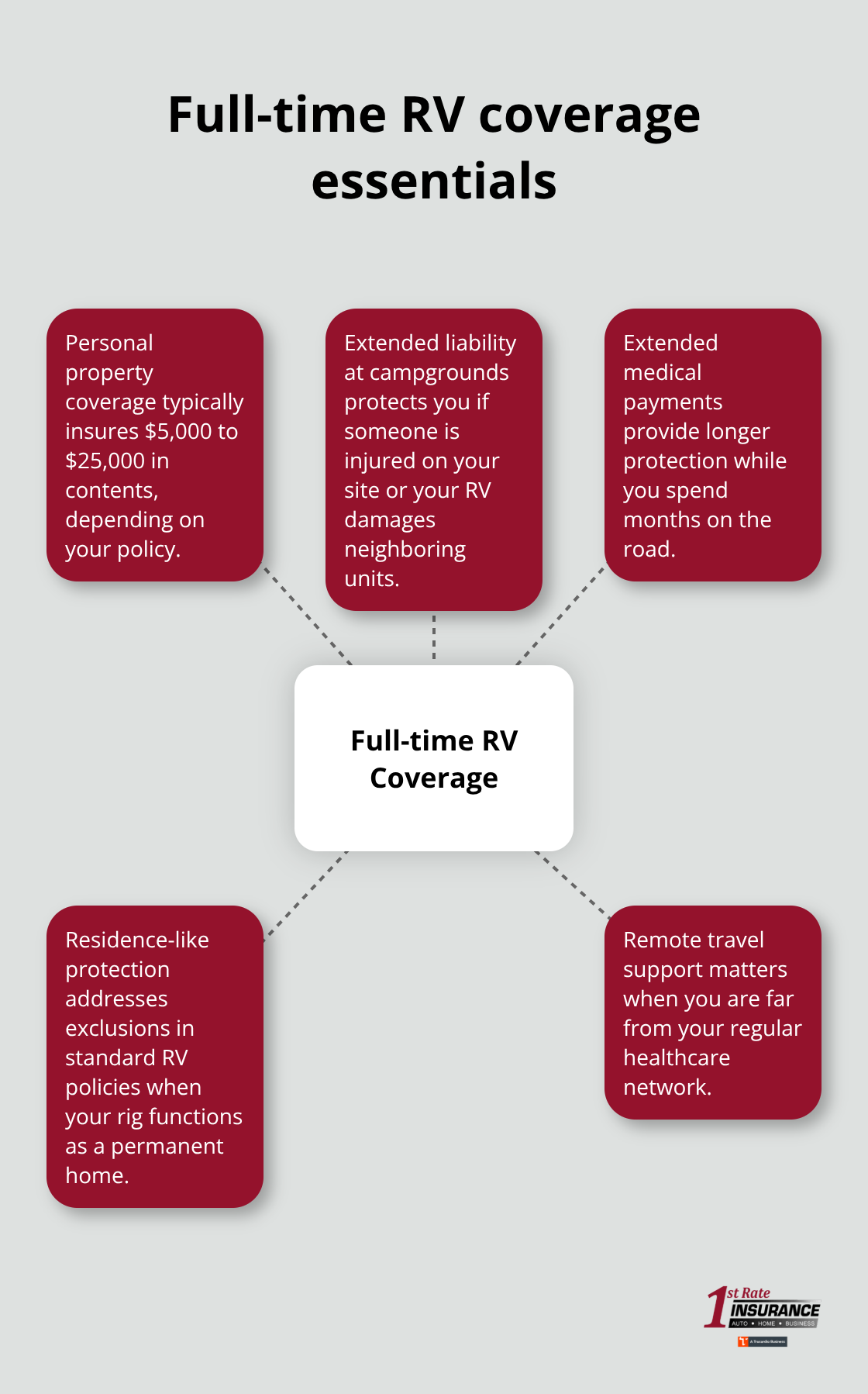
Full-time policies also extend medical payments coverage to longer periods, critical when you spend months traveling through Washington’s remote areas far from your regular healthcare network.
Part-Time RV Owners Often Overlook Critical Gaps
Part-time RV owners frequently skip specialized protections, assuming their homeowners policy covers contents or their auto policy handles everything. This assumption creates dangerous coverage gaps that cost thousands when claims arise. Licensed agents at First Rate Insurance Plus, Inc. shop more than 20 carriers to help you identify exactly which protections your current policies provide and which ones you need to add. The difference between adequate coverage and inadequate coverage often comes down to a single conversation with someone who understands RV-specific risks in Washington.
When you’re ready to compare actual quotes from multiple carriers, the next step involves understanding how to evaluate options side-by-side without overpaying for coverage you don’t need.
Getting the Right RV Insurance Quotes in Bothell
Compare coverage limits Across Multiple Carriers
Comparing RV insurance quotes requires more than collecting numbers from a few carriers-it demands understanding how coverage limits, deductibles, and specialized protections affect your actual costs. Most RV owners make the mistake of comparing only premium prices, ignoring that a $50-per-month savings often comes with $1,000 higher deductibles or missing coverage entirely. When you request quotes, ensure you choose the same coverages, limits, settlement options and deductibles across all carriers so premiums reflect real differences rather than coverage variations.
Request quotes with liability limits of $100,000 per person and $300,000 per accident (double Washington’s minimum), comprehensive and collision coverage with $500 deductibles, and any specialized protections your situation demands. Track which carriers offer uninsured motorist coverage, as this protects you against hit-and-run accidents and drivers carrying insufficient insurance-something many Bothell RV owners skip despite Washington’s high uninsured driver rates.
Specify Your Usage Patterns for Accurate Pricing
Different carriers price full-time versus part-time RV coverage dramatically differently, so specify your actual usage patterns rather than letting the agent guess. Some carriers charge $400 annually for weekend RV owners but $1,200 for full-time residents, while others maintain tighter pricing across both categories. Request quotes from at least five carriers before deciding, as rate variation in Washington’s RV market typically ranges from 20 to 40 percent for identical coverage.
Evaluate Bundling Against Standalone Rates
Bundling RV insurance with existing auto or home policies generates real savings, but only if you compare the bundled total against standalone quotes from specialized carriers. Some RV owners bundle with their current insurer and overpay by hundreds annually because they never checked standalone rates. Licensed agents shop more than 20 carriers to identify whether bundling with your current provider or switching everything to a specialist RV insurer delivers better value for your specific situation.
Leverage Local Agent Expertise
Local agents understand how Bothell’s geography, weather patterns, and campground environments affect RV risk differently than agents in other regions, translating to more accurate quotes and better coverage recommendations. An agent familiar with Washington’s roads can identify which carriers offer superior roadside assistance networks in remote mountain passes versus coastal areas, which matters significantly when you travel hours from the nearest service center. Agents also know which carriers adjust rates based on secure storage-RVs parked in locked facilities qualify for discounts that online quote systems often miss entirely.
Final Thoughts on Bothell RV Insurance
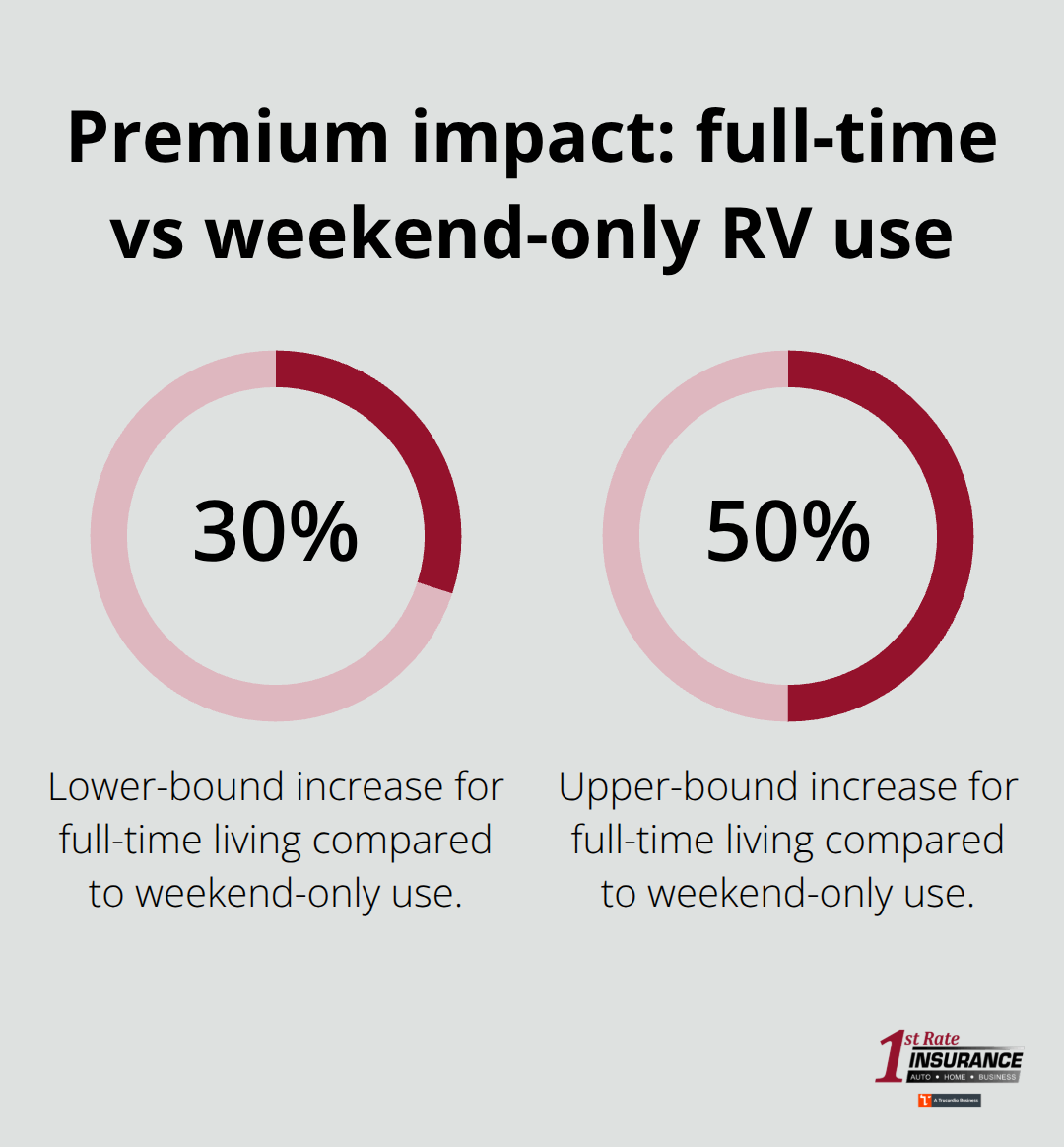
Your RV insurance rates depend on factors that extend far beyond your driving record. Age and type of RV matter significantly-newer Class A motorhomes cost more to insure than older travel trailers, while full-time living status increases premiums by 30 to 50 percent compared to weekend-only use. Storage location affects pricing too; RVs parked in secured facilities qualify for discounts that unattended outdoor storage doesn’t receive. Annual mileage, claims history, and whether you tow behind another vehicle all influence what carriers charge for Bothell RV insurance quotes.
Shopping locally for RV coverage delivers advantages that online quote systems simply cannot match. Local agents understand Washington’s specific weather patterns, road conditions, and campground environments in ways national carriers don’t. They know which insurers offer superior roadside assistance networks through remote mountain passes versus coastal highways, which directly impacts your protection when breakdowns happen far from civilization.
At First Rate Insurance Plus, Inc., our licensed agents shop more than 20 carriers to find RV insurance quotes that match your actual coverage needs and budget. Contact our Kirkland-based team to compare real options from multiple carriers in a single conversation. Visit First Rate Insurance Plus, Inc. today to protect your RV investment with coverage that actually fits your life on the road.
Disclaimer: The information provided in this blog is for general informational purposes only and does not constitute legal, financial, or insurance advice. Coverage options, terms, and availability may vary. Please consult with a licensed professional for advice specific to your situation. Artificial intelligence may have been used to generate text and images in some blog articles.
