

Redmond Earthquake Insurance Options: Protect Your Home From The Ground Up
Redmond sits in one of Washington’s most seismically active regions, and most homeowners don’t realize their standard insurance won’t cover earthquake damage. At First Rate Insurance Plus, Inc., we’ve helped countless Redmond residents understand their Redmond earthquake insurance options and find coverage that actually protects their homes.
The difference between being prepared and facing financial disaster often comes down to one decision: getting the right earthquake insurance before the ground shakes.
Why Redmond Sits on Shaky Ground
The Fault Lines Threatening Redmond
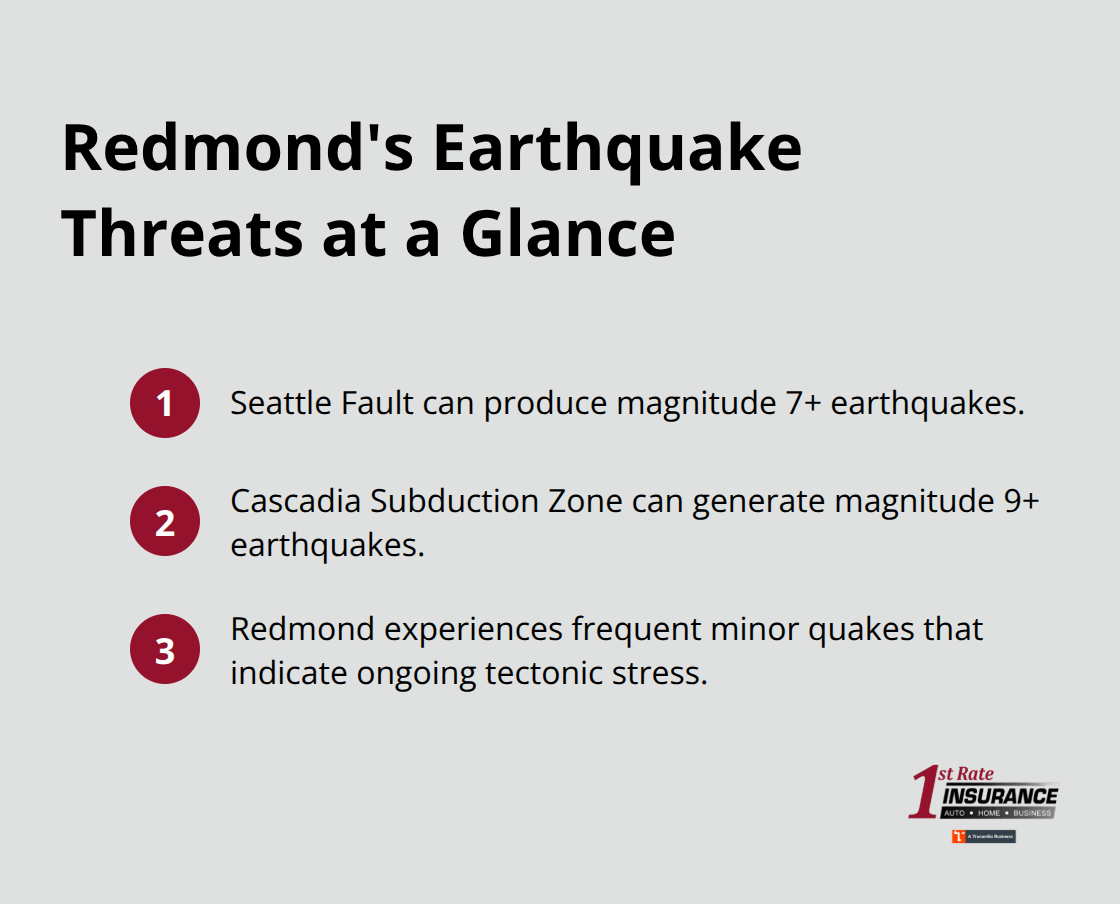
Redmond occupies one of Washington’s most seismically volatile zones, positioned near the Seattle Fault and within range of the Cascadia Subduction Zone. The U.S. Geological Survey identifies the Seattle Fault as capable of producing magnitude 7+ earthquakes, with the last major rupture occurring around 1,100 years ago. This isn’t distant history-it means another significant event is overdue from a geological perspective.
The Cascadia Subduction Zone, stretching from northern California to British Columbia, poses an even greater threat, capable of generating magnitude 9+ earthquakes. The Pacific Northwest Seismic Network continuously monitors these fault lines, and their data shows Redmond experiences minor earthquakes regularly-most too small for people to notice, but significant enough to indicate ongoing tectonic stress.
Recent Seismic Activity in the Region
Redmond experienced notable seismic activity in 2001 when the Nisqually earthquake, centered near Olympia, reached magnitude 6.8 and caused measurable damage across the region. More recently, smaller tremors in 2020 and 2021 reminded residents that seismic activity remains constant in this area. These events demonstrate that the threat isn’t theoretical-it’s real and recurring.
The Standard Insurance Gap
Your standard homeowners insurance policy explicitly excludes earthquake damage, which catches most Redmond homeowners off guard. Insurance companies classify earthquakes as a separate peril requiring separate coverage because the financial exposure is enormous and unpredictable. A magnitude 7 earthquake in the Puget Sound region could cause an estimated 40 billion dollars in damage across Washington State, according to USGS estimates.
Your homeowners policy covers wind, hail, theft, and fire-but the moment the ground shakes, you’re on your own unless you’ve purchased earthquake coverage separately. Many people don’t realize that mortgage lenders typically don’t require earthquake insurance the way they require standard homeowners coverage, so the decision falls entirely to you.
Why This Gap Matters
This disconnect between what people think they have and what they actually have represents the biggest risk facing Redmond homeowners today. Most homeowners assume their coverage is comprehensive only to discover significant gaps when they review their actual policy documents. Understanding what your current policy covers-and what it doesn’t-is the first step toward protecting your home and finances from earthquake damage. Once you know where you stand, you can explore the specific earthquake insurance options available to Redmond residents.
Your Earthquake Insurance Options in Washington
Washington State Program vs. Private Policies
Two distinct paths exist for Redmond homeowners seeking earthquake coverage: the Washington State Earthquake Program and private insurance policies. The Washington State Earthquake Program, administered through the state, offers coverage through participating insurers with a standard 15% deductible of your home’s replacement cost value. If your home is worth $500,000 and earthquake damage occurs, you’d pay $75,000 out of pocket before coverage kicks in. The program caps annual premium increases at 10%, which provides some predictability, though premiums have risen consistently over the past decade as the state reassesses risk.
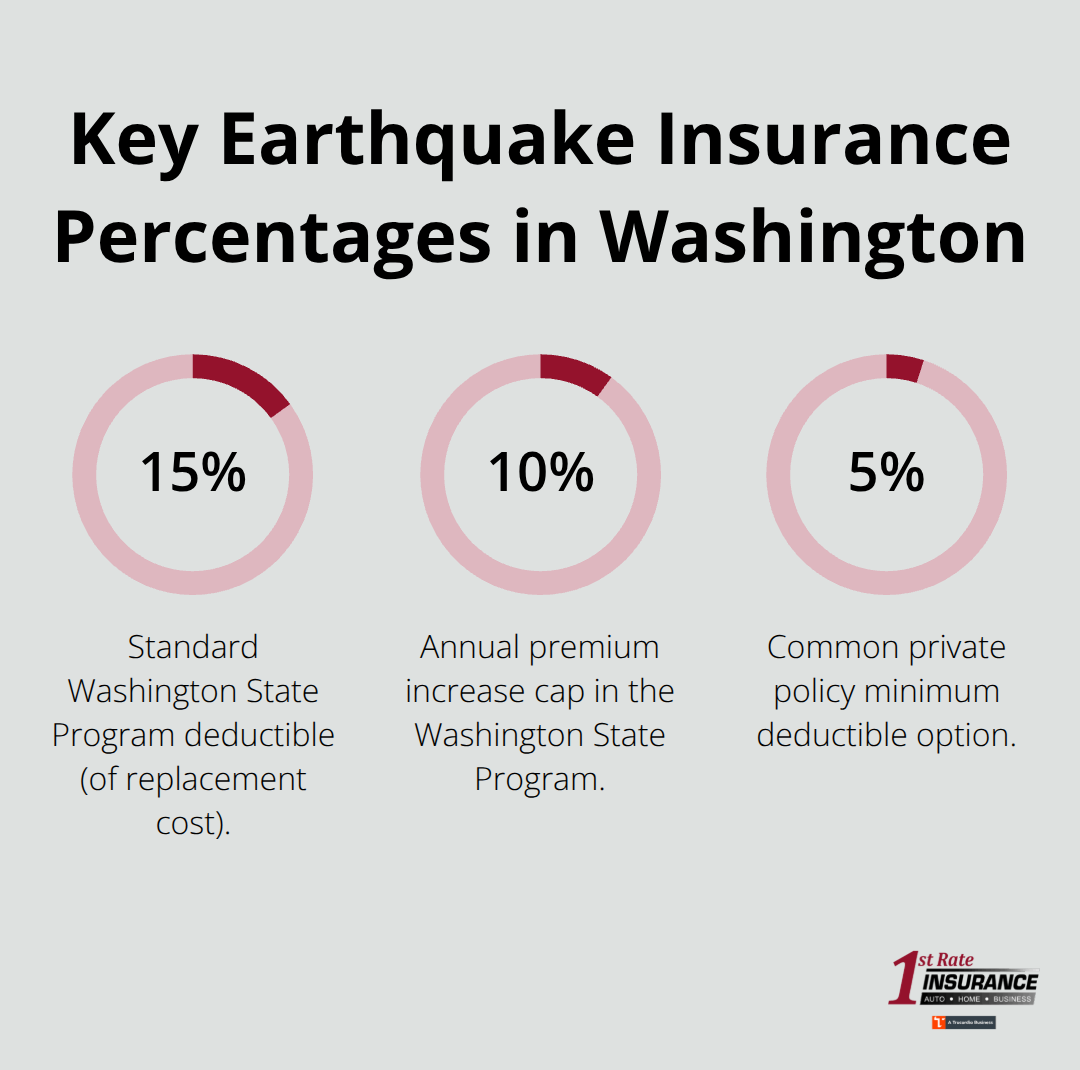
Private earthquake insurance policies offer more flexibility-deductibles typically range from 5% to 25% of your home’s value, and some insurers now offer 10% deductibles specifically to compete for Redmond homeowners concerned about affordability. The trade-off is that private policies often cost more upfront but provide better control over your coverage structure. Shopping between these options matters significantly; a homeowner with a $600,000 home could pay anywhere from $800 to $1,800 annually depending on the policy chosen and the insurer.
Actual Cash Value vs. Replacement Cost Coverage
The coverage type you select fundamentally changes what you’ll receive if an earthquake damages your home. Actual cash value coverage pays the depreciated value of your items, which typically means receiving less than what it would cost to rebuild. Replacement cost coverage pays to replace your damaged items with new ones without depreciation deductions, but premiums run 20-30% higher.
For most Redmond homeowners with mortgages, replacement cost coverage makes financial sense because a total loss could leave you paying off a mortgage on a home you can’t afford to rebuild. The math strongly favors replacement cost for anyone who couldn’t absorb significant out-of-pocket rebuilding costs.
Additional Coverage Details That Matter
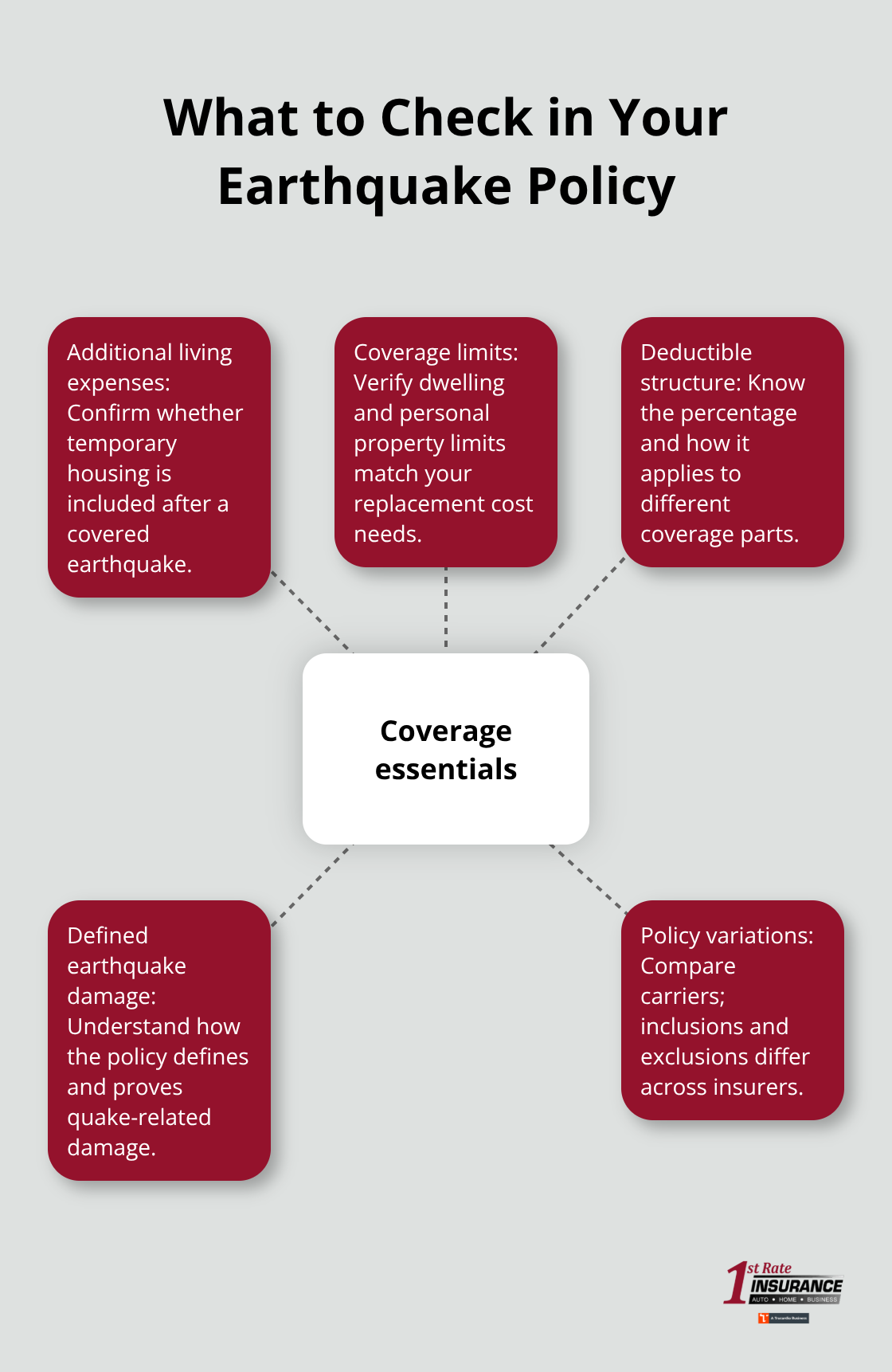
Your agent should clarify what each policy covers-some policies include additional living expenses if you need temporary housing, while others don’t, creating another important distinction when comparing policies side by side. Coverage limits, deductible structures, and what qualifies as earthquake damage all vary between insurers and policy types. These details directly impact how much protection you actually have when the ground shakes. Understanding these specifics before you purchase a policy prevents costly surprises later.
The next step involves assessing your home’s specific vulnerability and determining which coverage limits actually make sense for your situation.
Selecting Coverage That Matches Your Home’s Real Risk
Calculate Your Home’s True Replacement Cost
Start with your home’s replacement cost value, not its market value. The market value of your Redmond home might be $650,000, but rebuilding it from the ground up after earthquake damage could cost $750,000 or more depending on current construction costs and labor availability in the Pacific Northwest. Contact local contractors or use the National Association of Home Builders’ cost estimator to get a realistic figure, then base your coverage limits on that number. This step matters because underinsuring your home leaves you exposed to massive out-of-pocket expenses, while overinsuring wastes money on premiums you don’t need.
Compare Deductible Options Against Your Financial Capacity
Once you know your replacement cost, you can accurately compare deductible options. A 10% deductible on a $750,000 home means paying $75,000 before coverage kicks in, while a 15% deductible jumps that to $112,500. For most Redmond homeowners, the 5-10% deductible range offered by private insurers provides better financial protection than the standard 15% Washington State Program deductible, even if premiums run slightly higher. The difference between these deductible levels could determine whether you can afford repairs or face years of financial strain after a major earthquake.
Request Written Quotes From Multiple Carriers
Contact three to five local agents and request written quotes with identical coverage specifications to make meaningful comparisons. Provide each agent with your home’s replacement cost value, desired deductible level, and whether you want actual cash value or replacement cost coverage. Agents in Redmond who specialize in earthquake insurance understand local construction costs and can identify which carriers offer the best rates for homes in your specific neighborhood. Rates vary significantly based on home age, construction type, and proximity to fault lines within Redmond itself.
Evaluate Total Cost Across Different Damage Scenarios
Get quotes from both the Washington State Program and private insurers, then compare the total annual cost alongside what you’d pay out of pocket for different damage scenarios. An agent familiar with Redmond properties can clarify coverage details that generic online quotes miss, such as whether your policy covers foundation damage (which matters significantly in earthquake situations). Shopping multiple sources yourself ensures you understand your options before making this important decision.
Final Thoughts
Redmond sits in one of Washington’s most seismically active regions, and waiting to purchase earthquake insurance until after the ground shakes costs you hundreds of thousands of dollars out of pocket. The Seattle Fault and Cascadia Subduction Zone pose genuine threats, standard homeowners policies exclude earthquake damage, and a major event could devastate your finances without proper coverage. Your next step is straightforward: contact a local agent who understands Redmond’s specific earthquake risks and compares Redmond earthquake insurance options across multiple carriers.
Request written quotes from both the Washington State Earthquake Program and private insurers using identical coverage specifications. Calculate your home’s actual replacement cost value, decide what deductible level fits your financial situation, and choose between actual cash value and replacement cost coverage based on your ability to absorb losses. The carrier you select affects both your annual premium and the claims process when you need it most.
We at First Rate Insurance Plus, Inc. help Redmond homeowners navigate these exact decisions every day. Our licensed agents work with multiple carriers to find coverage that matches your home’s value and your financial capacity, and we understand local construction costs and neighborhood-specific risks. Contact First Rate Insurance Plus, Inc. today to get started with quotes that reflect your actual situation.
Disclaimer: The information provided in this blog is for general informational purposes only and does not constitute legal, financial, or insurance advice. Coverage options, terms, and availability may vary. Please consult with a licensed professional for advice specific to your situation. Artificial intelligence may have been used to generate text and images in some blog articles.

