

Small Business Umbrella Coverage: How to Safeguard Your Enterprise and Family
One lawsuit can wipe out years of hard work. Small business owners face real liability threats every day, from customer injuries to property damage claims that standard policies won’t cover.
At First Rate Insurance Plus, Inc., we’ve seen how small business umbrella coverage fills those dangerous gaps. This guide walks you through what you need to know to protect both your enterprise and personal assets.
What Umbrella Insurance Actually Covers
How Umbrella Coverage Works
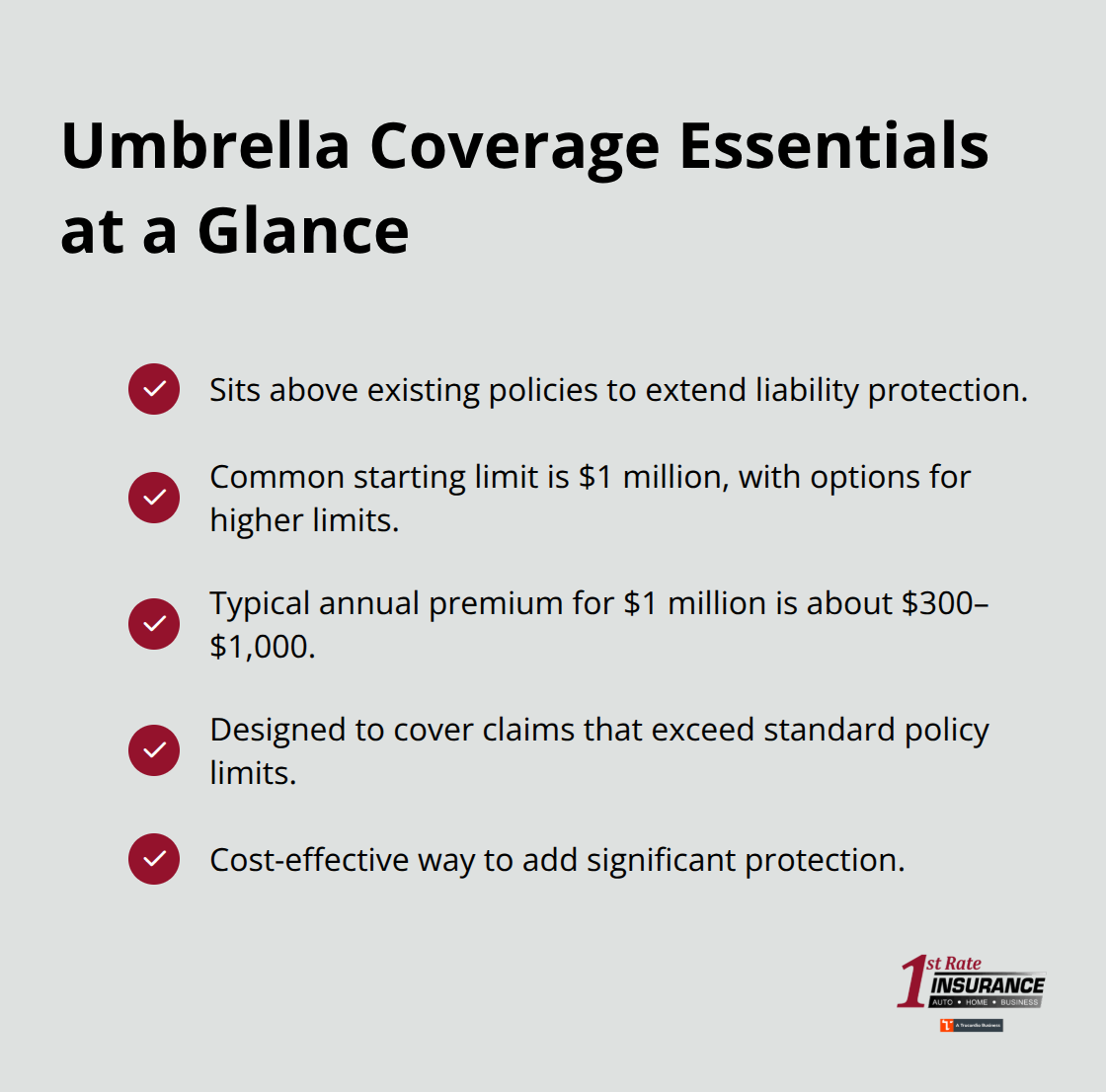
Umbrella insurance sits on top of your existing business policies and covers liability claims that exceed your standard policy limits. Most small business umbrella policies start at $1 million in coverage, though you can purchase $2 million, $5 million, or higher depending on your risk profile. The cost remains surprisingly affordable-many small business owners pay between $300 and $1,000 annually for $1 million in umbrella coverage, making it one of the cheapest ways to add serious protection.
What Claims Umbrella Coverage Handles
This coverage applies to bodily injury, property damage, and personal injury claims that your general liability, auto, or property policies don’t fully cover. A customer slips in your store, a product causes injury, an employee gets hurt, or a vendor claims property damage-these incidents happen regularly. If a court awards $2 million in damages but your general liability policy caps out at $500,000, umbrella coverage fills that $1.5 million gap. Without umbrella protection, you personally pay the difference.
The Real Cost of Going Without Coverage
Small business owners face real liability exposure that standard policies simply don’t handle. A single lawsuit can force you to pay out of pocket for amounts beyond your policy limits, potentially liquidating personal assets, bank accounts, or retirement savings. The protection extends beyond your business too-it covers claims related to your business operations that could otherwise attach to your personal assets, your home equity, and your future income.
The financial exposure is too high to ignore and the premiums are too low to skip. Understanding your specific liability risks helps you determine whether umbrella coverage fits your business needs.
Common Liability Risks Small Business Owners Face
Product Liability Claims Hit Hard and Fast
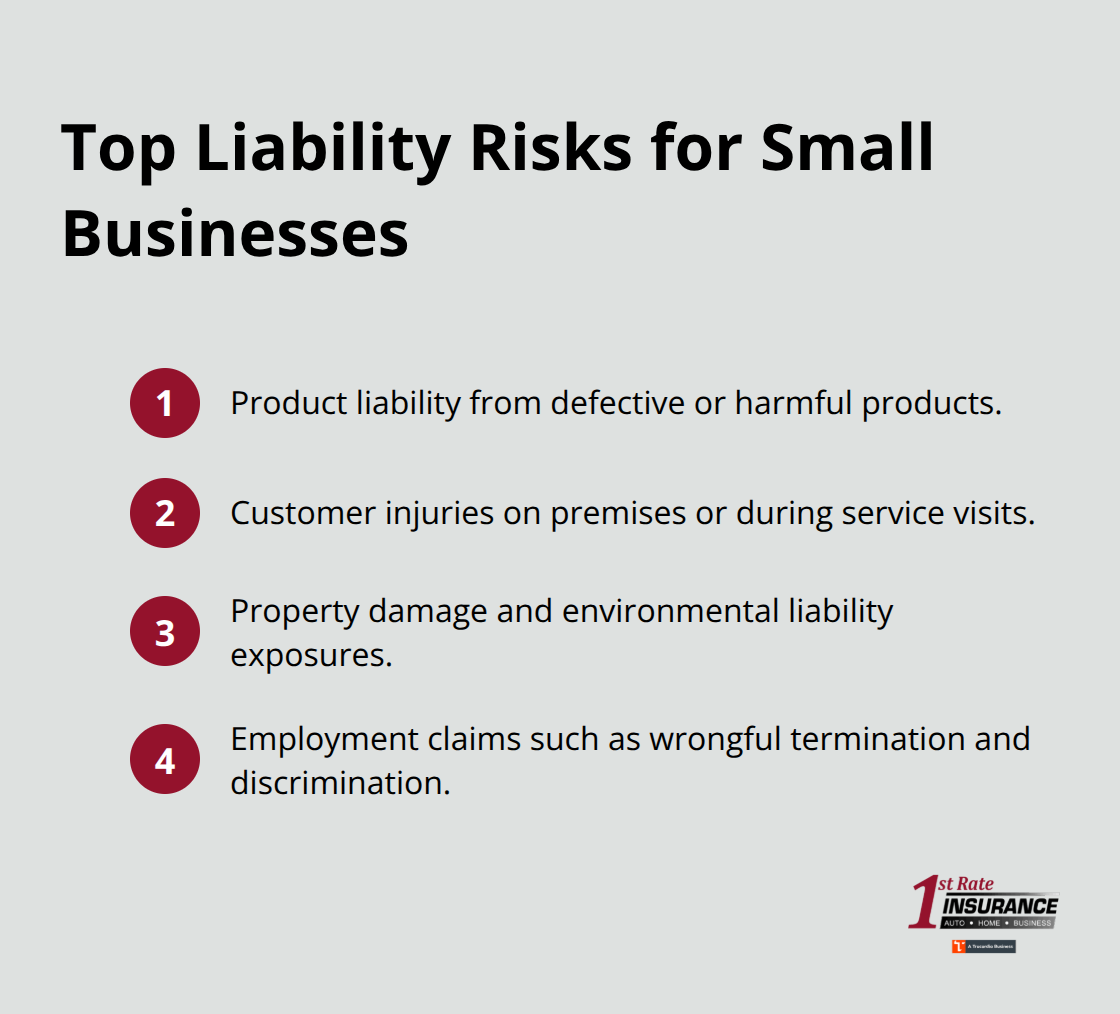
Product liability claims represent one of the most expensive threats small business owners face. A manufacturing company that sells defective equipment, a food business that causes foodborne illness, or a retailer whose product injures a customer all faces immediate exposure. What makes this dangerous is that many general liability policies have sub-limits for product liability, capping coverage at amounts that may not reflect actual damages when serious injuries occur.
Customer Injuries on Your Property Create Expensive Lawsuits
Customer injuries on your premises create similar problems-a slip-and-fall in your store, an injury during a service appointment, or a guest hurt at your facility can generate lawsuits that quickly exceed standard policy limits. Your general liability policy might cover $300,000, but medical bills, lost wages, and pain-and-suffering awards often push claims well beyond that threshold.
Property Damage and Environmental Liability Expose You to Catastrophic Losses
Property damage and environmental liability expose small business owners to catastrophic losses that most don’t anticipate. A contractor accidentally damages a client’s building, your business causes water damage to a neighboring property, or your operations release pollutants into soil or groundwater-these incidents trigger claims that standard policies frequently exclude or severely limit. Environmental liability is particularly expensive because remediation costs can reach substantial amounts, and regulatory agencies may hold you responsible for cleanup.
Employment Claims Drain Cash Reserves Quickly
Employment-related claims have become increasingly costly, with wrongful termination, discrimination, and harassment lawsuits generating significant legal expenses. Many small business owners skip employment practices liability insurance thinking it won’t happen to them, then face legal bills that drain cash reserves within months.
These liability gaps exist across virtually every small business type, and standard policies leave you personally exposed. Understanding which risks apply to your specific operation helps you determine what coverage levels you actually need.
How to Choose the Right Umbrella Coverage for Your Business
Calculate Your Actual Liability Exposure
Start by calculating your actual liability exposure, not what feels comfortable. Most small business owners drastically underestimate their risk. Take your annual revenue, multiply it by 2 to 3, and that’s a realistic floor for umbrella coverage. A $500,000 revenue business should carry at least $1 million to $1.5 million in umbrella protection. This isn’t conservative-it’s practical. A single serious injury lawsuit in healthcare, construction, or professional services regularly exceeds $2 million in damages.
The Insurance Information Institute reports that the median cost of a premises liability claim is around $30,000, but catastrophic injuries push settlements to $500,000 or higher. Your general liability policy tops out at $300,000 or $500,000 in most cases, leaving massive gaps. Umbrella coverage fills those gaps at a fraction of what you’d pay if forced to defend yourself personally. The cost difference between $1 million and $2 million in umbrella coverage is typically $200 to $400 annually, making the upgrade to higher limits almost always worthwhile for small business owners.
Match Coverage to Your Actual Operations
Your specific business type determines which liability exposures matter most. A contractor faces property damage and bodily injury claims from work sites. A retailer faces customer slip-and-fall and product liability exposure. A service business faces claims from work performed on client property. Audit your past incidents, even minor ones, and map them against your policy limits. If you’ve had three customer injury claims in the past five years, that’s your signal to carry higher limits.
Request your loss history from your current insurance carrier-this document shows exactly what claims have been filed against your business. Don’t rely on industry averages; your specific operational risks matter more. A consulting firm with no physical customers needs less coverage than a gym or restaurant. A manufacturing operation handling hazardous materials needs significantly more coverage than a professional services firm. Your umbrella coverage floor should reflect your actual claims history and operational exposure, not generic benchmarks.
Compare Quotes from Multiple Carriers
Contact at least three carriers and request quotes for multiple coverage levels-$1 million, $2 million, and $3 million. Most small business owners are shocked at how inexpensive the increases are. The difference between $1 million and $3 million umbrella coverage typically runs $400 to $600 annually, not thousands. This pricing structure makes underinsurance inexcusable.
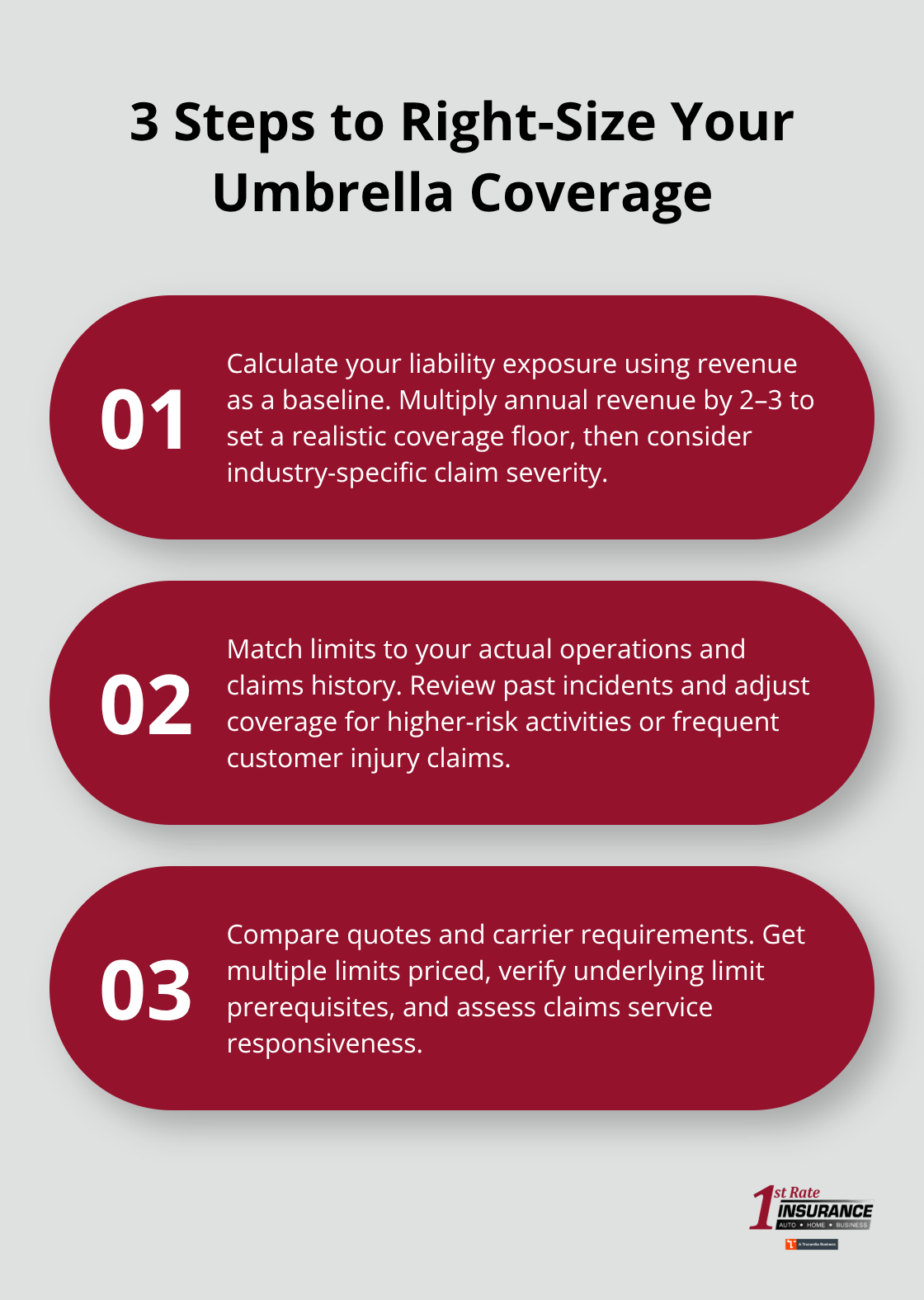
Compare not just price but also the carriers’ specific requirements. Some require minimum underlying liability limits of $500,000 before qualifying for umbrella coverage. Others require $1 million in underlying limits. These prerequisites affect your total insurance cost and should factor into your decision. Ask each carrier about their claims process, response times, and whether they offer 24/7 claims support. A cheap umbrella policy that takes weeks to respond to claims becomes expensive when you need it.
Final Thoughts
Small business umbrella coverage isn’t optional protection for risk-averse owners-it’s the financial safety net that separates business failure from business survival. The math is straightforward: standard policies leave dangerous gaps, lawsuits regularly exceed those limits, and umbrella premiums cost less than most business owners spend on coffee annually. A $1 million umbrella policy running $300 to $1,000 per year is the cheapest insurance decision you’ll make.
Your next step involves calculating your actual liability exposure based on your revenue and operational risks, not industry guesses. Multiply your annual revenue by 2 to 3 to establish a realistic umbrella coverage floor, then request your loss history from your current carrier to identify which claims have hit your business. Match your coverage limits to those patterns-a business with three customer injury claims in five years needs higher limits than one with none.
Contact multiple carriers and request quotes for $1 million, $2 million, and $3 million in coverage. You’ll find that jumping from $1 million to $3 million typically costs only $400 to $600 more annually (a difference so small that underinsurance becomes indefensible). We at First Rate Insurance Plus, Inc. work with small business owners across Washington to build comprehensive coverage strategies that protect both enterprise and personal assets, and our licensed agents can help you find the right small business umbrella coverage to close the gaps in your current protection.
Disclaimer: The information provided in this blog is for general informational purposes only and does not constitute legal, financial, or insurance advice. Coverage options, terms, and availability may vary. Please consult with a licensed professional for advice specific to your situation. Artificial intelligence may have been used to generate text and images in some blog articles.

